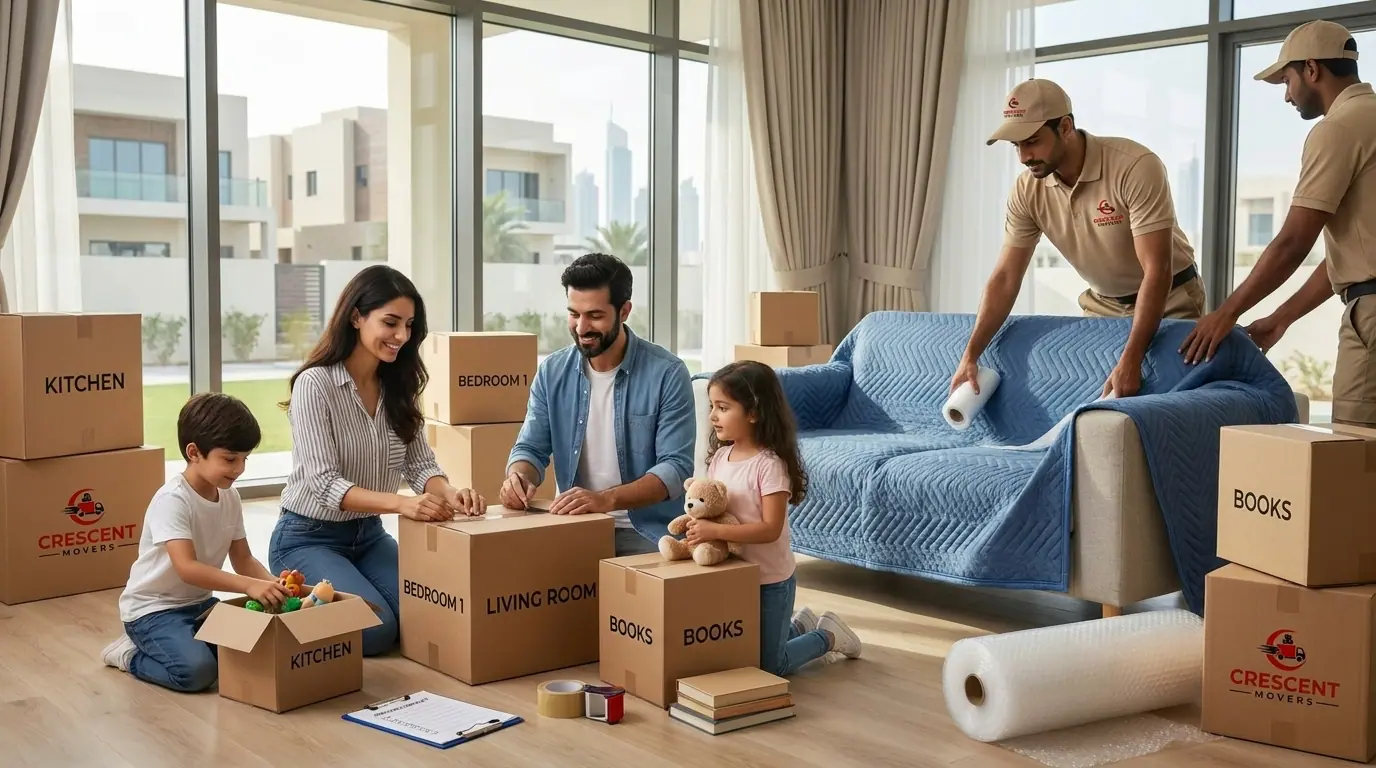
A family can be excited about moving into a new home, but once packing begins, the number of small tasks can quickly become obvious.
There are children's belongings to organize, documents to keep accessible, furniture to prepare, boxes to label, schedules to coordinate and daily routines to maintain. For parents, the challenge is often not one large task but dozens of smaller decisions happening at the same time.
A Family Moving Checklist Abu Dhabi can make the process easier by turning those decisions into manageable stages.
Instead of trying to prepare the entire household at once, families can work through a timeline, organize rooms gradually, separate important belongings and prepare children for the change.
This approach is particularly useful when moving between different types of residential properties. Apartment buildings can involve elevators, parking and access arrangements, while villa moves may involve more rooms, larger furniture and outdoor belongings.
Abu Dhabi is home to both apartment communities and villa-based residential areas, so the practical details of a move can vary depending on the destination property. The Government of Abu Dhabi describes the emirate as family-friendly and notes that residents live across beachfront, golf-course and downtown apartment environments. Home
The goal of this guide is simple: help families understand what needs to happen before, during and immediately after a home relocation.
Family moves involve more than simply transporting household belongings.
Parents may be managing work schedules, children's routines, school-related commitments and household preparation at the same time. Without a clear system, it becomes easy to postpone small tasks until they become urgent.
A checklist helps by creating a visible sequence.
Sorting belongings, buying packing materials, preparing documents, labeling boxes and organizing furniture can quickly become overwhelming when everything is treated as one large job.
Breaking the move into stages makes each task easier to approach.
A move does not have to be handled by one person.
Family members can divide responsibilities according to age and ability. Adults can manage documents, furniture and scheduling, while children can help sort personal belongings and identify items they want to keep accessible.
Important belongings can easily be overlooked when a household contains many rooms.
A checklist provides a place to record tasks such as checking storage areas, separating valuables, preparing essentials and reviewing each room before leaving.
A structured approach also makes packing easier.
Instead of randomly filling boxes, families can organize belongings room by room and label them according to their destination.
Preparation cannot remove every challenge from moving, but it can reduce the number of decisions that need to be made at the last minute.
The earlier important tasks are completed, the more attention the family can give to the actual moving day.
A month before moving is a useful point to establish the overall plan.
The exact preparation period will vary depending on the size of the household, the amount of furniture and the moving schedule. However, starting early gives families more time to organize without rushing.
Begin by going through the home systematically.
Separate belongings into practical categories such as:
Do not automatically pack everything simply because it is already in the house.
Moving is an opportunity to decide whether certain belongings are still useful. Reducing unnecessary items before packing can also reduce the amount that needs to be organized later.
Work through one room at a time.
Start with bedrooms, living spaces, storage areas, kitchen items and other parts of the home. Identify everyday belongings, rarely used items, fragile objects and large furniture.
A room-by-room approach is easier to manage than creating one large collection of unsorted belongings.
Consider the new property's layout before deciding what should travel.
A large piece of furniture that fits comfortably in the current home may not be suitable for the new space. Think about dimensions, placement and access before committing to move every large item.
Once the belongings are understood, establish the basic moving plan.
Confirm the intended moving date and consider how it fits around family responsibilities.
If children have school or other regular commitments, think about how the moving schedule will affect their routine.
Create a simple timeline covering the next few weeks.
Include packing stages, document preparation, furniture preparation, essential items and final checks.
Decide which parts of the move the family can manage and where additional assistance may be useful.
For a complete household relocation involving substantial furniture and many belongings, professional home relocation support can be considered as part of the preparation plan.
Children may respond differently to a move depending on their age and circumstances.
Explain the move in simple, practical terms.
Let children know what is happening, when the move will take place and what they can expect on moving day.
Try to maintain familiar routines where possible.
Preparing meals, clothing and personal items in advance can make the transition easier when the home is being packed around them.
Identify belongings that children may want to keep accessible, such as favorite toys, books, school materials or comfort items.
These should not be packed into boxes that will be difficult to access immediately after arrival.
Two weeks before the move, preparation should become more focused.
At this stage, the family should gradually move from planning toward active packing and organization.
Begin with belongings that are rarely used.
This may include:
Leave everyday essentials available until closer to moving day.
Every box should have enough information to make unloading easier.
A simple system can include:
For example:
or:
Clear labels can help the family identify where boxes belong without opening every carton.
Keep important documents separate from ordinary household belongings.
These may include identification documents, contracts, school-related paperwork, property documents and other paperwork that the family may need during the transition.
Valuable and personally important belongings should remain easy to identify and access.
Avoid placing essential items in random boxes simply because there is available space.
Create a separate collection of items the family will need immediately after reaching the new property.
This can include:
Keeping these items separate can make the first evening at the new home easier to manage.

During the final week, the objective should be completion rather than starting major new tasks.
Most belongings should already be packed.
Only everyday essentials and items that need to remain accessible should be left until the final stage.
Create a clearly identified bag or box for the family's first day and night.
Think about what each family member would need if the majority of boxes remained unopened for several hours.
Review the moving date, property access, parking arrangements and any building or community procedures that apply to the move.
For apartment buildings, elevator availability may need to be confirmed in advance.
Keep documents, valuables, phones, chargers, basic clothing and children's important items accessible.
The aim is to avoid searching through packed boxes while the household is being moved.
Moving day can feel busy even when preparation has been completed properly.
A short checklist helps keep attention on the important tasks.
Before leaving the old property, check rooms, cupboards, storage areas and other spaces where belongings may have been left.
At the destination, focus first on essentials rather than trying to unpack the entire home immediately.
Packing a family home can become easier when it is organized around rooms and priorities rather than simply the number of boxes.
Keep belongings from the same room together where possible.
This makes labeling easier and helps the family know where each box should go after arrival.
Children's belongings can be particularly important to organize carefully.
Keep favorite toys, school materials, clothing and other frequently used items separate from things that can remain packed for longer.
Glassware, artwork, mirrors and decorative items require additional attention.
Protect delicate items individually where appropriate and avoid placing heavy household goods on top of fragile belongings.
Documents should remain accessible throughout the relocation.
Keep them together rather than placing them into ordinary household cartons.
Use a consistent labeling approach throughout the home.
Room names, contents and priority can provide enough information to organize unloading without opening every box.
When a family has limited time or a large number of delicate belongings, professional packing support can be considered as part of the moving plan.
The property type can significantly affect how a family prepares for relocation.
Apartment buildings may involve additional coordination because belongings often need to move through shared spaces.
If the building uses shared elevators, families should confirm how moving activity is scheduled and whether any arrangements are required.
Different residential buildings can have their own procedures for moving activity, access and shared areas.
These should be confirmed for the actual property rather than assumed.
The location where the moving vehicle can stop can affect how efficiently furniture and boxes reach the building entrance.
For families relocating between apartment buildings, apartment relocation assistance can be considered when access, elevators and building coordination are part of the move.
Villa relocations can involve different challenges.
Larger homes may contain more furniture, appliances and household belongings.
Measure major items and consider their route into the new property before moving day.
With more rooms to organize, labeling becomes particularly useful.
Assign boxes to specific rooms so that unloading can follow the home's layout.
Families should also remember items kept outside the main living areas.
Check gardens, balconies, storage areas and other outdoor spaces for belongings that need to be moved.
Why it happens: Families underestimate how long it takes to sort and pack a complete household.
Problem caused: The final days become crowded with unfinished packing and last-minute decisions.
Better solution: Begin with rarely used belongings and gradually move toward everyday essentials.
Why it happens: Labeling can seem like an unnecessary extra task when packing is already taking time.
Problem caused: Families may not know where boxes belong or which cartons need to be opened first.
Better solution: Use a consistent room, contents and priority labeling system.
Why it happens: Documents can become mixed with ordinary household belongings.
Problem caused: Important paperwork becomes difficult to locate when needed.
Better solution: Keep important documents together and accessible throughout the move.
Why it happens: Adults naturally focus on furniture, boxes and property arrangements.
Problem caused: Children may lose access to familiar belongings or struggle with disrupted routines.
Better solution: Prepare children's essential items separately and communicate the moving plan clearly.
Why it happens: A move may initially appear manageable.
Problem caused: The physical and organizational workload can become difficult as moving day approaches.
Better solution: Assess the size of the move honestly and decide which tasks the family can manage and where professional assistance may be useful.
A family move in Abu Dhabi may require planning around the specific property rather than following a single approach for every relocation.
Community access, parking, building procedures and scheduling can vary between residential developments.
Before moving day, confirm any procedures that apply to the destination property.
This is particularly important for apartment buildings and managed residential communities.
Weather can affect the handling of furniture and boxes, particularly when belongings need to be moved through outdoor areas.
Keep weather conditions in mind when planning the moving schedule and access route.
Consider where the moving vehicle can stop and how far belongings need to travel between the vehicle and property entrance.
Apartment residents should consider elevators, entrances, corridors and other shared areas.
Try to coordinate the moving schedule around the family's daily responsibilities.
For families in areas such as Al Reem Island, Khalifa City, Yas Island, Saadiyat Island and Al Raha, the exact access arrangements should be confirmed with the relevant property or community rather than assumed.
These considerations are consistent with the broader need to treat each property's requirements individually. Abu Dhabi's government framework recognizes different types of residential units and identifies the competent local authority in relation to properties and residential units. Home
Ideally, start as soon as the moving date and destination property are confirmed. A few weeks of preparation gives the family more time to sort belongings, pack gradually and organize important tasks.
Start with belongings that are rarely used, such as seasonal items, decorations, books and stored household goods. Keep daily essentials accessible until closer to moving day.
Create a simple timeline, divide responsibilities, prepare children's essentials separately and avoid leaving major packing tasks until the final few days.
Children should have easy access to important personal belongings such as favorite toys, books, clothing, school materials and other items they may need during the transition.
Use a consistent labeling system based on the room, contents and priority of each box. This helps identify where boxes belong and which ones should be opened first.
It depends on the size and complexity of the relocation. Professional support may be useful when a family has substantial furniture, many belongings, fragile items or limited preparation time.
Families can overlook small but important tasks such as checking storage areas, separating documents, preparing essentials or reviewing every room before leaving.
Complete most preparation before moving day, keep important items accessible, confirm property access arrangements and communicate clearly about furniture placement and essential belongings.
A Family Moving Checklist Abu Dhabi gives families a practical way to turn a complicated relocation into a series of manageable tasks.
Start by sorting belongings and creating a realistic timeline. Then prepare children and family members, pack non-essential items, organize documents, label boxes and separate the belongings that will be needed immediately after arrival.
As moving day approaches, focus on completing preparation rather than creating new tasks. Confirm property access, parking and scheduling arrangements, particularly when moving into an apartment building or managed community.
For villa relocations, consider larger furniture, multiple rooms and outdoor belongings. For apartment moves, pay closer attention to elevators, building access and shared spaces.
The most important principle is to prepare according to the family's actual needs. A move does not have to be treated as one enormous task. With a clear timeline, organized belongings and the right level of assistance, each stage becomes easier to manage.
For families that need to discuss their relocation requirements, you can contact Crescent Movers to discuss the practical details of your move.