
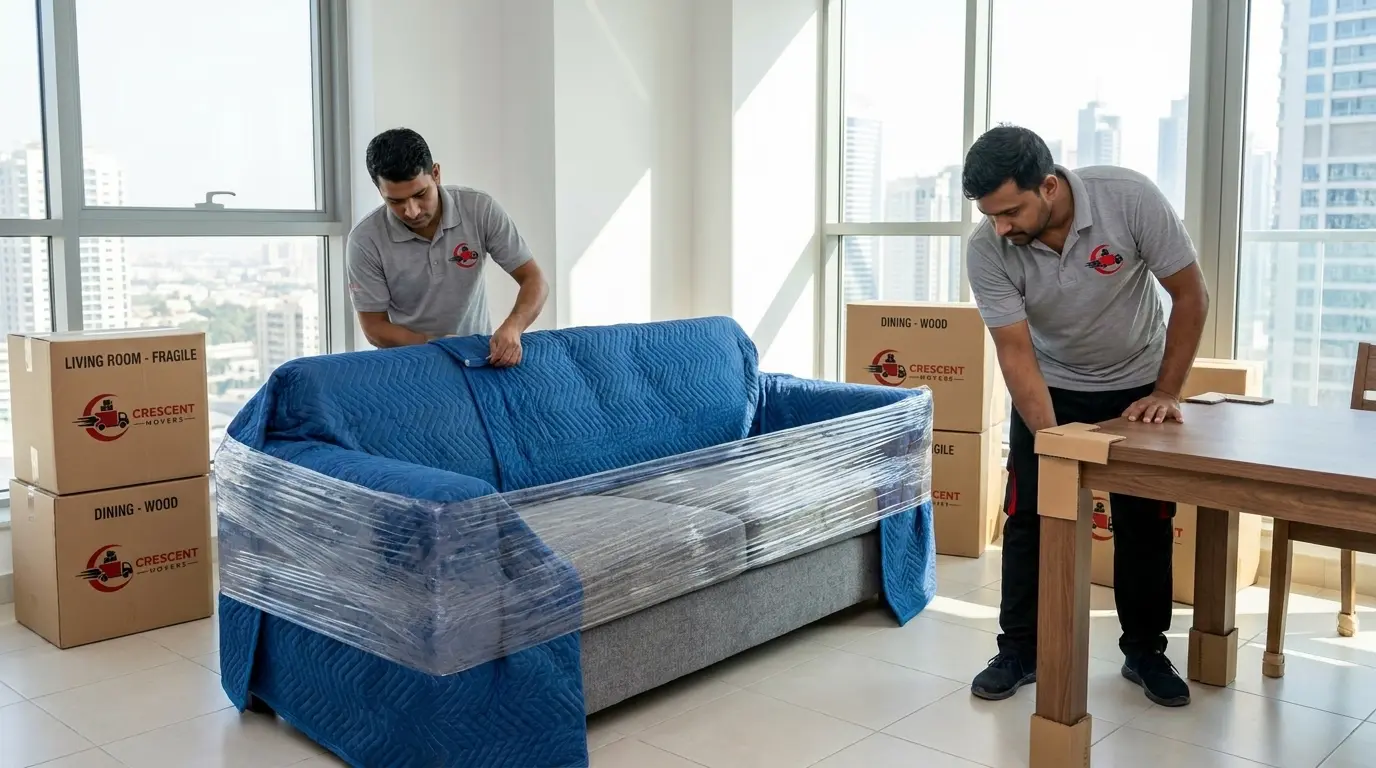
How to protect furniture during moving in Abu Dhabi
Furniture Protection Guide

How To Protect Furniture During Moving in Abu Dhabi

Moving furniture can look straightforward until a large sofa needs to pass through a narrow doorway, a wooden table has to be carried down a staircase, or a glass cabinet needs to be transported without scratches or breakage.

A family may spend years choosing furniture for its home. Some pieces have significant financial value, while others may have sentimental importance that cannot easily be replaced. During relocation, these items can face several handling challenges, from contact with walls and doorways to movement during loading and transportation.

This is why knowing how to protect furniture during moving is an important part of home relocation preparation.

Furniture protection starts before moving day. Large pieces should be inspected, loose components identified, surfaces prepared and access routes considered. The right protection method also depends on whether the item is made from wood, glass, fabric or another material.

For families, villa owners and apartment residents in Abu Dhabi, furniture preparation can also involve practical considerations such as elevators, narrow spaces, parking arrangements and the route between the property and moving vehicle.

The goal is not simply to get furniture from one address to another. The goal is to prepare each item appropriately, handle it carefully and place it safely at the destination.

Why Furniture Protection Matters During Moving

Furniture can be one of the most difficult parts of a relocation because large items are not as easy to pack and carry as ordinary boxes.

A carton can usually be sealed and labeled, but a sofa, wardrobe, dining table or cabinet may require several preparation steps before it can be moved.

Financial Value

Furniture can represent a significant household investment.

Large sofas, dining sets, wardrobes, beds and other pieces may be expensive to replace. Even when an item is not new, damage to its surface, structure or finish can affect its usefulness and appearance.

Proper preparation gives furniture better protection during the stages where accidental contact or movement may occur.

Emotional Value

Not every valuable piece of furniture is valuable because of its price.

Some items may have been passed between family members, purchased for an important occasion or associated with a particular period of life. Damage to such an item may be difficult to compensate for simply by purchasing another piece.

This is another reason to consider the specific handling requirements of furniture before relocation.

Damage Risks

Furniture can encounter several potential risks during a move.

  • Scratches
  • Dents
  • Surface marks
  • Broken glass
  • Fabric damage
  • Contact with walls or doorways
  • Damage to detachable components

The level of risk depends on the furniture, the property layout and how the item is handled.

Transportation Movement

Furniture can also experience movement during transportation.

A properly prepared item should be positioned and protected in a way that considers its shape, surface and other belongings being transported alongside it.

The objective is to reduce unnecessary movement and contact during the journey.

Proper Preparation

Furniture protection begins before the item leaves the room.

Inspect the furniture, identify removable parts, consider its dimensions and review the route it needs to take. This preparation can reveal potential problems before moving day rather than after the item is already being carried.

Different Types Of Furniture That Need Extra Care

Not every piece of furniture requires the same protection method.

A wooden dining table has different requirements from a fabric sofa, while a glass cabinet may require additional attention because of its fragile surfaces.

Wooden Furniture

Wooden furniture can be affected by scratches, impacts and contact with hard surfaces.

Tables, wardrobes, cabinets, beds and wooden chairs should be examined before preparation.

Pay particular attention to:

  • Corners
  • Edges
  • Finished surfaces
  • Decorative sections
  • Exposed wooden areas

When you want to protect wooden furniture, the preparation should focus on keeping vulnerable surfaces covered and reducing unnecessary contact during handling.

Moisture is another consideration for certain wooden finishes. Furniture should be prepared according to its material and finish rather than treated as if every wooden item has the same requirements.

Sofas And Upholstery

Sofas, armchairs and other upholstered furniture can collect dust or become exposed to marks during handling.

Fabric surfaces may also be vulnerable to contact with walls, floors or other items.

Before moving upholstered furniture, consider:

  • Fabric condition
  • Exposed edges
  • Removable cushions
  • Armrests
  • The route through the property

Keeping removable cushions and loose components organized can also make handling easier.

Glass Furniture

Glass furniture requires particular attention because the material can break or develop visible damage if handled improperly.

Examples may include:

  • Glass tables
  • Glass cabinets
  • Display units
  • Glass shelves

Glass sections should be identified before moving so that they can receive appropriate protection and careful handling.

Avoid placing heavy objects against fragile glass surfaces and consider the route through doors, corridors and elevators before the item is moved.

Antique Or Valuable Pieces

Antique or valuable furniture may require additional care because of its construction, finish, age or design.

Such pieces should be assessed individually.

Before moving an important item, consider whether it has:

  • Fragile decorative details
  • Removable components
  • Delicate finishes
  • Glass sections
  • Unusual dimensions

The more unusual the furniture, the more important it becomes to understand how it should be handled before moving day.

How To Prepare Furniture Before Moving

Good furniture preparation is a combination of inspection, cleaning, dismantling where appropriate, surface protection and access planning.

Clean Furniture Before Packing

Furniture should be reasonably clean before protection is applied.

Cleaning can make it easier to inspect the item for existing marks, scratches or other conditions before the move.

This also helps you understand which areas require additional protection.

Take a moment to check:

  • Corners
  • Edges
  • Drawers
  • Handles
  • Glass sections
  • Visible surfaces

The purpose is not to perform extensive restoration. It is simply to understand the condition of the furniture before handling begins.

Remove Loose Parts

Some furniture contains components that can become loose during movement.

Depending on the construction, these may include:

  • Drawers
  • Shelves
  • Accessories
  • Detachable legs
  • Other removable parts

Removing a component can sometimes make furniture easier to handle, but not every piece should automatically be dismantled.

The decision should depend on the construction, dimensions and access route.

Keep removed parts organized and associated with the correct furniture item so they can be identified later.

Protect Surfaces

Furniture surfaces can come into contact with door frames, walls, floors and other objects while being moved.

Appropriate protective materials may help reduce this contact.

Common approaches can include:

  • Moving blankets
  • Protective wrapping
  • Padding
  • Corner protection

The protection should match the material and shape of the furniture.

For example, exposed corners may need additional padding, while a polished surface may require protection against scratches.

Measure Large Furniture

Measuring large furniture before moving can prevent access problems.

Check the dimensions of items such as:

  • Sofas
  • Wardrobes
  • Beds
  • Dining tables
  • Large cabinets

Then consider the route from the furniture's current position to the vehicle.

Important points can include:

  • Doorways
  • Hallways
  • Staircases
  • Elevators
  • Building entrances
  • Loading areas

A piece that fits comfortably inside a room may still create a problem at the doorway or elevator entrance.

Planning the route in advance is therefore an important part of moving furniture safely.

Furniture Moving Mistakes To Avoid

Mistake 1: Moving Furniture Without Protection

Why it happens: Furniture can look durable, so protection may seem unnecessary.

Damage caused: Unprotected surfaces can come into contact with walls, doors, floors and other items.

Better solution: Inspect furniture before moving and protect exposed surfaces, corners and fragile sections according to their material.

Mistake 2: Dragging Heavy Furniture

Why it happens: Dragging can appear easier than lifting or carefully repositioning a large item.

Damage caused: Dragging may place stress on furniture and can also affect floors or surfaces along the route.

Better solution: Plan how the item will be moved and use appropriate handling methods rather than relying on uncontrolled dragging.

Mistake 3: Ignoring Dismantling Requirements

Why it happens: People may assume every large item should remain fully assembled.

Damage caused: An assembled piece may become unnecessarily difficult to move through doors, corridors or elevators.

Better solution: Check whether detachable components can be safely removed when appropriate, and keep all parts organized.

Mistake 4: Poor Space Planning

Why it happens: Furniture placement is sometimes considered only after everything reaches the new property.

Damage caused: Large items may need to be repositioned several times, increasing unnecessary handling.

Better solution: Think about destination placement and access before moving day.

Mistake 5: Using Unsuitable Materials

Why it happens: Whatever protective material is available may be used without considering the furniture's surface.

Damage caused: Inappropriate materials may provide insufficient protection or make handling more difficult.

Better solution: Choose protection according to the furniture's material, shape and handling requirements.

How Professional Furniture Handling Reduces Risk

Large furniture requires more than physical strength.

The handling process can involve planning the route, protecting surfaces, coordinating movement and positioning items carefully at the destination.

Professional handling can include:

  • Experienced handling
  • Proper equipment
  • Safe lifting methods
  • Organized loading
  • Careful placement

For households with substantial furniture, the process can become easier to coordinate when preparation and handling are treated as connected stages rather than separate tasks.

Where larger or more delicate items require dedicated attention, professional furniture handling support can be considered as part of the relocation plan.

This can be particularly useful when furniture includes large wardrobes, heavy tables, oversized sofas, delicate cabinets or items that require dismantling and reassembly.

The specific approach should depend on the furniture, property layout and access conditions.

Furniture Protection During Apartment And Villa Moves

Furniture handling can be different depending on the type of property.

The same sofa may be straightforward to move from one ground-level property but more complicated when an apartment elevator, narrow corridor or shared entrance is involved.

Apartment Moves

Apartment furniture moving can involve several access challenges.

These may include:

  • Elevators
  • Narrow spaces
  • Building rules

Before moving large furniture, consider the route from the room to the building entrance.

An elevator may have limited internal space, while corridors or doorways can affect how large pieces need to be positioned.

If the building has specific access arrangements, these should be confirmed before moving day rather than assumed.

Villa Moves

Villa relocation can involve different challenges.

A villa may contain:

  • Larger furniture
  • Multiple rooms
  • Outdoor items

Furniture may need to travel through several areas of the property before reaching the vehicle.

Outdoor furniture, garden items or larger household pieces should also be included in the preparation plan if they are part of the relocation.

For a complete home relocation where furniture handling is one part of a larger move, complete home relocation support can be considered when the property and household requirements make a coordinated process useful.

Packing Materials Used To Protect Furniture

The right protective materials can make furniture preparation more organized.

Different items may require different combinations of protection depending on their surfaces and dimensions.

Moving Blankets

Moving blankets can provide a protective layer around furniture during handling and transportation.

They can be useful for larger surfaces where protection from contact is important.

Plastic Wrap

Protective wrap can help keep certain coverings or materials in place during handling.

It should be used according to the furniture and the protection already applied.

Corner Protection

Corners can be particularly exposed when furniture passes through doorways and narrow areas.

Additional corner protection can help address these vulnerable points.

Padding

Padding can provide an additional layer between furniture surfaces and surrounding objects.

It can be especially useful around edges, corners and other exposed sections.

Strong Covers

Furniture covers can help keep surfaces protected during handling and transportation.

The important point is to select materials based on the furniture rather than applying exactly the same method to every item.

For households that need assistance with preparation, professional packing support can be considered when furniture and household belongings require organized protection before relocation.

Abu Dhabi Furniture Moving Considerations

Furniture relocation in Abu Dhabi can involve different practical considerations depending on the property, building and moving schedule.

Heat Exposure

Outdoor handling can expose furniture and protective materials to Abu Dhabi's hot conditions.

Planning the movement sequence can help avoid unnecessary exposure of sensitive belongings to outdoor conditions.

Furniture materials should be considered individually, especially when certain surfaces or finishes require additional care.

Humidity

Environmental conditions can also be relevant when handling furniture.

The appropriate preparation depends on the material, finish and condition of each item.

Building Access

Apartment buildings can have different layouts and access arrangements.

Before moving large furniture, check the available route through entrances, corridors and elevators.

Parking

The distance between the building entrance and the moving vehicle can affect how furniture is handled.

A longer route may require more coordination, particularly when moving large or heavy items.

Scheduling

Moving schedules can vary according to the property and building arrangements.

For example, furniture relocation involving Al Reem Island, Khalifa City, Yas Island, Saadiyat Island or Al Raha should be planned around the actual property's access conditions rather than relying on assumptions from another building or community.

The practical approach is to confirm relevant access, parking and scheduling details before moving day.

Final Furniture Protection Checklist

A simple checklist can help confirm that the main preparation has been completed.

Before Moving

☐ Clean furniture
☐ Remove loose parts
☐ Measure large items

During Preparation

☐ Wrap surfaces
☐ Protect corners
☐ Label parts

Moving Day

☐ Check furniture condition
☐ Confirm placement
☐ Inspect after delivery

A checklist does not need to become another complicated part of the relocation.

Its purpose is simply to confirm that furniture has been inspected, prepared and planned before it starts moving.

Frequently Asked Questions

1. How can I protect furniture during moving?

Inspect furniture before moving, remove suitable loose components, protect vulnerable surfaces and corners, and plan the route through doors, corridors, elevators and other access points.

2. What materials protect furniture best?

Common protective materials can include moving blankets, padding, protective wrapping, corner protection and suitable covers. The appropriate material depends on the furniture's surface, size and handling requirements.

3. Should furniture be dismantled before moving?

Not every piece needs to be dismantled. Detachable parts may sometimes be removed when doing so makes the furniture easier to handle, but the decision should depend on the item's construction, dimensions and access route.

4. How do movers protect wooden furniture?

Wooden furniture can be prepared by protecting exposed surfaces, corners and edges and by planning how the item will pass through the property. The protection method should reflect the furniture's finish and construction.

5. How are large sofas moved safely?

Large sofas should be assessed according to their dimensions and the route through the property. Doorways, corridors, elevators and stairs should be considered before moving, and exposed surfaces should be appropriately protected.

6. Do professional movers provide furniture protection?

Furniture protection can be included as part of relocation support depending on the provider and the requirements of the move. The specific preparation and handling services should be confirmed before moving day.

7. How can I prevent scratches during relocation?

Protect exposed surfaces, corners and edges, avoid uncontrolled contact with walls and doorways, and use suitable protective materials during handling and transportation.

8. What furniture needs extra care during moving?

Glass furniture, valuable or antique pieces, polished wooden furniture, large wardrobes, oversized sofas and furniture with delicate surfaces or detachable components may require additional preparation and attention.

Conclusion

Knowing how to protect furniture during moving starts with preparation rather than waiting until the furniture is ready to leave the property.

Begin by inspecting each major item, identifying loose components, protecting vulnerable surfaces and measuring large furniture where necessary. Consider the route through doors, corridors, elevators and other access points before moving day.

Wooden furniture, upholstered pieces, glass furniture and valuable items can have different handling requirements. The protection method should therefore be based on the material, size, condition and construction of each item.

Professional handling can also be useful when furniture is large, heavy, delicate or difficult to move through the property. Organized loading, suitable equipment, careful lifting and planned placement can make the process more structured.

For Abu Dhabi relocations, apartment and villa moves may present different practical considerations. Building access, elevators, parking, outdoor handling and scheduling should be considered according to the actual destination property.

Areas such as Al Reem Island, Khalifa City, Yas Island, Saadiyat Island and Al Raha can contain different property layouts and access conditions, so furniture preparation should always reflect the specific move.

The basic principle is simple: inspect furniture before moving, protect the vulnerable areas, plan the route and handle each item according to its requirements.

When preparation is treated as an important part of relocation rather than an afterthought, furniture can be moved in a more organized and controlled way.