
How to Prepare Kitchen Appliances Before Moving
Kitchen appliances can require more preparation than many people expect when getting ready to move. A refrigerator may need time to defrost, a dishwasher can retain water, and a washing machine may require specific components to secure its drum during transportation.
Simply unplugging an appliance and wrapping it is not always enough. Different appliances have different preparation requirements, and the correct procedure can depend on the model and installation.
The safest approach is to identify each appliance, consult its manufacturer's instructions, arrange any necessary disconnection, and secure removable components before moving day.
This guide explains how to prepare common kitchen appliances, avoid preventable problems, and organize the work so that everything is ready for transportation.
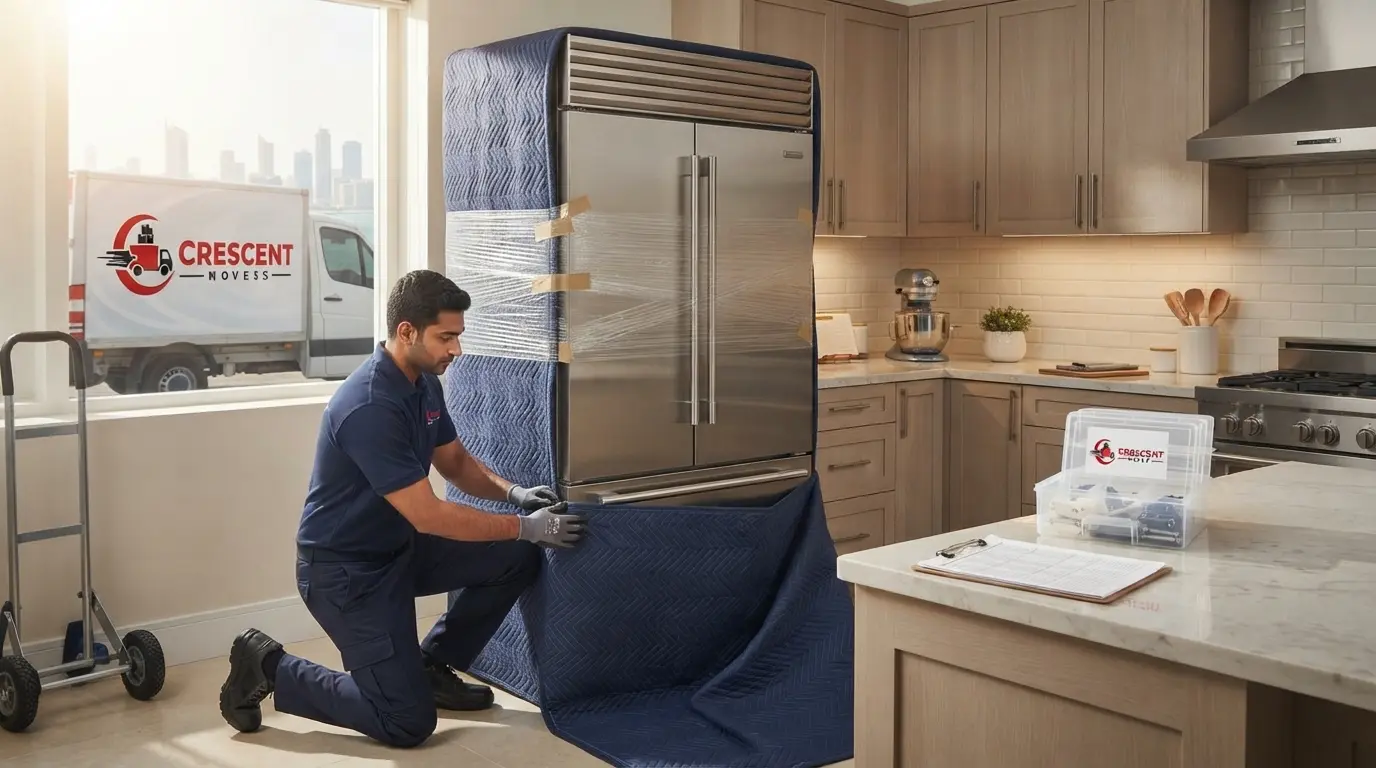
Why Kitchen Appliances Need Preparation Before Moving
Kitchen appliances combine electrical components, moving parts, water connections, and sometimes gas connections. Incorrect handling can damage the appliance, cause leaks, or create safety risks.
Preparation also makes the moving process more organized. When accessories, shelves, hoses, and power cords are handled separately and labeled correctly, they are easier to locate during installation.
Before starting, make an inventory of the appliances you intend to take with you.
For example:
- Refrigerator or freezer
- Dishwasher
- Oven or cooker
- Microwave
- Electric kettle and toaster
- Coffee machine
- Food processor or blender
- Other countertop appliances
Not every appliance requires the same procedure. Use the manufacturer's instructions rather than applying one general method to everything.
1. Create an Appliance Preparation Checklist
Start by recording each appliance and the work it requires.
A simple checklist helps you identify which tasks you can complete yourself and which require professional assistance.
| Appliance | Preparation to consider |
|---|---|
| Refrigerator or freezer | Empty, defrost where required, clean and dry |
| Dishwasher | Disconnect water and power safely; drain remaining water according to the manual |
| Oven or cooker | Allow to cool, remove suitable loose components and arrange safe disconnection |
| Microwave | Remove loose accessories and protect the turntable |
| Coffee machine | Empty water reservoirs and remove detachable parts |
| Blender or food processor | Empty, clean and secure detachable components |
This is a planning guide, not a universal set of instructions. Always check the specific appliance manual for model-dependent requirements.
Also consider whether an appliance is freestanding, built-in, connected to a water supply, or attached to a gas line. These differences can affect the preparation process.
2. Prepare the Refrigerator and Freezer
Refrigerators and freezers often need advance preparation because food must be removed and ice or water may need time to thaw.
Empty the appliance
Use or remove perishable food before moving day. If you intend to keep food that needs refrigeration, plan how it will remain at a safe temperature during the move.
Do not assume that food can remain inside the refrigerator during transportation.
Defrost when required
If your appliance requires manual defrosting, allow enough time for the process before moving day.
Place suitable towels or containers to collect water, and make sure the floor remains dry to reduce slipping risks.
Follow the manufacturer's instructions for automatic-defrost models as well. Do not assume every refrigerator needs the same defrosting procedure or timetable.
Clean and dry the interior
Once the appliance is empty and any required defrosting is complete, clean the interior according to the manufacturer's care instructions.
Dry the shelves, drawers, and interior surfaces thoroughly before transportation. Remaining moisture can cause unpleasant odors when an appliance is closed.
Protect removable components
Remove shelves, drawers, and other components where the manufacturer recommends doing so.
Wrap suitable removable parts separately to protect them from knocks. If a component is designed to remain installed, secure it according to the manufacturer's guidance.
Check the transportation position
Do not assume every refrigerator can safely be transported in any position.
Check the manufacturer's instructions for the correct orientation and any requirements before reconnecting the appliance at the new property. Whirlpool also recommends following the specific refrigerator manual for transportation and reconnection guidance. Product Help | Whirlpool
3. Prepare the Dishwasher
Dishwashers can retain water in their hoses and internal components even when the visible interior appears empty.
Remove dishes and accessories
Empty the dishwasher completely. Remove loose items and detachable accessories that could move around during transportation.
Clean the interior if needed and follow the manufacturer's instructions for preparing the appliance for disconnection.
Arrange safe disconnection
Switch off the appliance and isolate its electrical supply according to the manufacturer's instructions.
Turn off the water supply before disconnecting water connections. If you are unfamiliar with the plumbing or electrical connections, arrange assistance from a qualified professional.
Drain remaining water
Water may remain in the dishwasher's drain system or hoses. Follow the model-specific instructions for draining it.
Prepare a suitable container and towels if the manual indicates that water may escape during disconnection.
Protect hoses and fittings
Once safely disconnected, allow hoses to drain and dry as appropriate. Keep the connections and fittings together so that they can be identified during installation.
Label the components if they are difficult to distinguish.
4. Prepare Ovens and Cooking Appliances
Ovens, cookers, and hobs need special attention because their connections and construction vary.
Allow the appliance to cool
Make sure the oven or cooking appliance is completely cool before cleaning or handling removable components.
Remove loose trays, racks, and accessories when the manufacturer recommends doing so. Wrap these parts separately to reduce movement and scratching.
Arrange disconnection before moving day
An electric appliance may be hardwired rather than connected through a conventional plug. Gas appliances also require specific precautions.
Do not attempt to disconnect or reconnect gas lines yourself unless you are appropriately qualified and authorized to perform that work. Arrange a qualified technician for gas connections and any electrical work that requires professional handling.
Do not pull an appliance out of its housing until you understand how it is installed and connected.
Protect removable components
Keep trays, racks, knobs, and other detachable parts together where practical.
Use suitable protective materials and avoid placing heavy items on glass components. If the oven door or another component requires special handling, follow the manufacturer's instructions.
5. Prepare Small Kitchen Appliances
Small appliances may be easier to handle than large units, but loose accessories and remaining liquids can still cause problems.
Examples include coffee machines, blenders, food processors, kettles, and toasters.
Empty and clean them
Remove food, grounds, crumbs, and remaining liquids where appropriate.
For appliances with water reservoirs, empty the reservoir and follow the manufacturer's cleaning and drying instructions before packing.
Never immerse an electrical appliance in water unless its instructions explicitly permit that procedure.
Remove detachable components
Separate removable bowls, blades, lids, trays, and accessories when suitable.
Sharp components, such as food processor blades, should be protected so that they do not injure anyone handling the packed items.
Keep each appliance's accessories together in a labeled bag or container. Do not place loose parts where they could damage the appliance's exterior.
Secure the power cords
Unplug the appliance and arrange its cord neatly without sharply bending or stretching it.
Avoid wrapping cords tightly around parts that could be damaged by pressure. Secure them in a way that prevents tangling during transportation.
Use original packaging when available
Original packaging can be useful when it still fits the appliance and provides appropriate support.
If it is unavailable, use a suitably sized, sturdy container with protective material to limit movement. Do not rely on a thin bag to protect a heavy or delicate appliance.
6. Disconnect Appliances Safely
Before preparing any appliance for transportation, identify its power and utility connections.
Electrical appliances
Switch off and unplug appliances where they use accessible plugs and the manufacturer's instructions permit it.
For hardwired equipment, do not attempt disconnection unless you are qualified to do so. Arrange an appropriate professional.
Keep plugs and cables protected during transportation, and never carry an appliance by its cord.
Water-connected appliances
Dishwashers, refrigerators with water dispensers, and some other appliances may connect to a water supply.
The supply must be isolated before the connection is removed. Remaining water should be drained according to the appliance's instructions.
If you cannot identify the correct valve or connection, seek professional assistance instead of forcing a fitting.
Gas-connected appliances
Gas cookers and other gas-connected equipment require particular care.
Arrange qualified assistance for disconnection and reconnection. Do not improvise with gas fittings or proceed if you suspect a leak.
If you smell gas, avoid operating electrical switches or creating ignition sources, leave the affected area, and contact the appropriate emergency or gas service.
Keep a record of connections
Where helpful, take photographs of accessible connections before disconnection, provided you can do so safely.
Keep manuals, fittings, and installation information together. Photographs can help identify the original arrangement, but they do not replace professional installation instructions.