
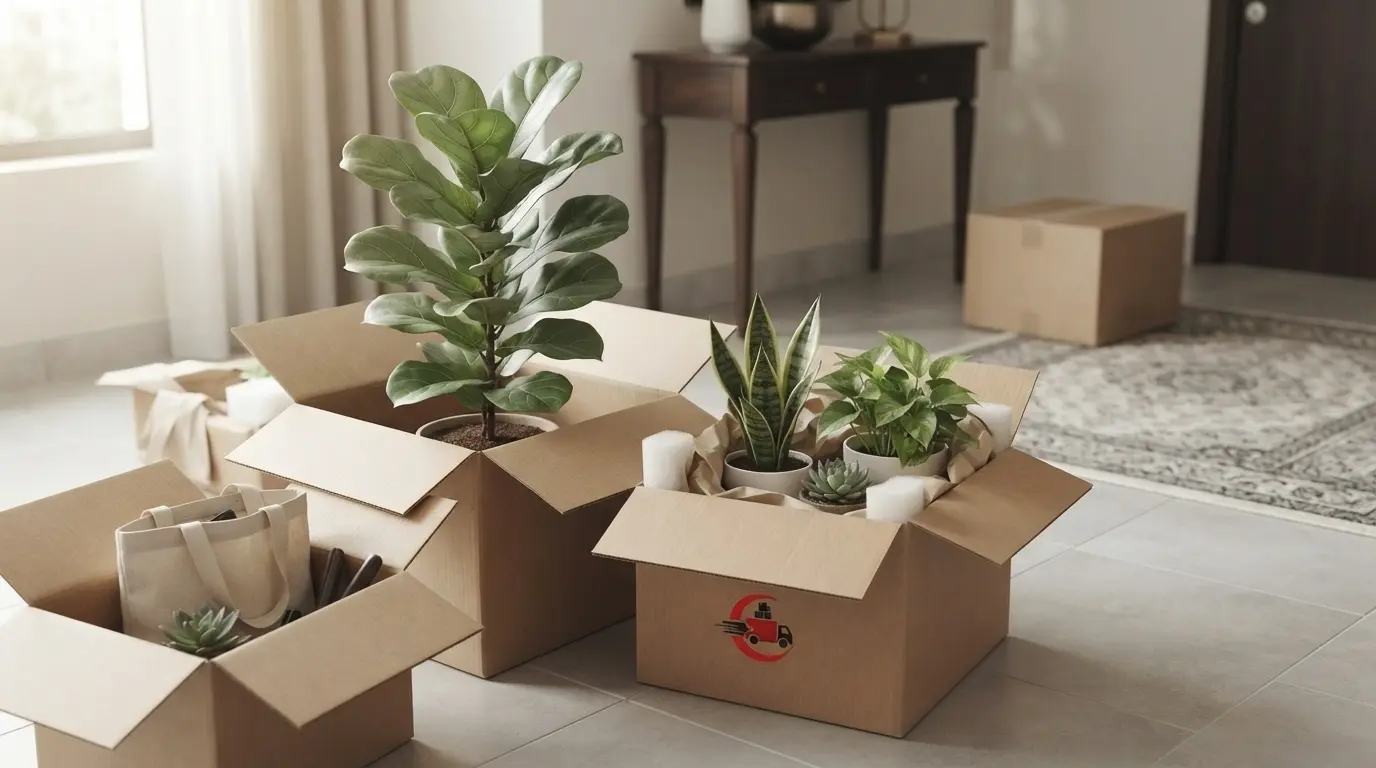
How to Move Indoor Plants Without Damaging Them
Indoor plants can be among the most awkward belongings to prepare for a move. A pot may be heavy, the soil can spill, and a plant with delicate leaves or long stems can be damaged if it is packed too tightly. Even when a plant arrives without visible damage, a sudden change in temperature, light or watering routine can affect how it settles into its new surroundings.
The best approach is to prepare plants before moving day, protect their pots and foliage, and plan how they will travel. Different plants have different needs, so avoid assuming that one packing method will suit every variety.
This guide explains how to move indoor plants without damaging them, from deciding which plants to take to transporting them and helping them adjust after arrival.
Why Indoor Plants Need Special Care During a Move
Unlike ordinary household items, plants are living things that respond to their surroundings. Their leaves and stems can be crushed, their soil can shift, and their roots may be affected by unsuitable conditions during transportation.
Common risks include:
- Broken leaves and stems: Plants may be knocked against doorways, other pots or containers.
- Spilled soil: Pots can tip over if they are not supported properly.
- Temperature stress: Leaving plants in a hot vehicle or exposing them to sudden temperature changes can cause harm.
- Excess moisture: Overwatering before the journey can make pots heavier and increase the risk of soil spills.
- Changes in light: A new home may have different window positions and light levels.
- Difficult handling: Heavy planters can be awkward to lift, especially on stairs or through narrow corridors.
The aim is to reduce unnecessary handling and environmental stress rather than trying to seal or immobilize the entire plant.
1. Decide Which Plants You Intend to Move
Before gathering packing materials, review your indoor plant collection.
Consider the size of each plant, the condition of its leaves and stems, the weight of its pot, and whether it is suitable for the journey you are planning. A healthy, compact plant may be straightforward to transport, while a large plant with spreading branches may require more space and careful handling.
Make separate groups for:
- Small plants that can fit securely in suitable containers.
- Medium-sized plants that need individual support.
- Large or spreading plants that require additional space.
- Fragile, trailing or delicate plants that need extra care.
- Plants that are unhealthy or already showing signs of stress.
Check plants for pests or visible disease before bringing them into the new home. If a plant is already struggling, consider whether moving it immediately is practical and seek plant-specific advice if needed.
Avoid repotting every plant just before moving. Repotting can disturb the roots, and combining that disturbance with transportation may create additional stress. Keep plants in their existing pots when practical unless there is a clear reason to change the arrangement.
2. Prepare Plants Before Moving Day
Give yourself enough time to prepare plants rather than leaving everything until the final hours.
Check watering needs
Do not water every plant according to the same schedule. Check the moisture level and care requirements of each variety.
Many plants travel better when their soil is lightly moist rather than saturated. Excess water can make pots heavier and cause soil to spill, but plants should not be left to dry out beyond what is appropriate for their needs.
The right timing depends on the plant, the potting mix and the expected journey. Follow the usual care requirements of each plant rather than applying a universal watering rule.
Remove damaged growth carefully
Trim dead or already damaged leaves if appropriate for the plant. Avoid unnecessary pruning, particularly when a plant is healthy and does not need it.
Remove loose decorative stones or other objects from the soil surface if they could fall out during transportation.
Check for pests
Inspect both sides of leaves, stems and the visible soil surface. Keep any plant with suspected pests separate from the rest of the collection until you know how to handle it.
Gather the necessary supplies
Useful supplies may include:
- Sturdy boxes or plant trays.
- Clean paper or suitable protective material.
- Lightweight cushioning for gaps.
- Separate bags for collecting loose soil.
- Labels and a marker.
- A stable carrier for heavier pots.
Choose materials that protect the plant without squeezing its leaves or restricting it unnecessarily.
3. Choose Suitable Containers for Each Plant
The right container helps keep plants upright and makes them easier to carry.
Small plants may fit into sturdy boxes with enough support to prevent tipping. Larger plants may be better transported individually or in a stable tray that accommodates the pot.
Before packing, check that each container has a strong base and enough room for the plant's foliage. Do not force a large plant into a box that bends its leaves or compresses its stems.
Keep pots upright
Position pots on a level base and support them so they cannot slide easily. Use suitable cushioning around the pot where necessary, leaving the foliage free from pressure.
Do not stack other boxes on top of plants. Even a light-looking carton can damage leaves or branches if it falls or presses against them.
Consider heavy decorative planters
Large ceramic, stone or decorative planters may be difficult to handle and may crack if knocked. Where practical, you can consider transporting the plant separately from a heavy outer planter, but only if the plant can be removed safely without causing unnecessary root disturbance.
If separating the plant is unsuitable, arrange appropriate support for the complete planter and use safe lifting methods.
4. Protect Leaves, Stems and Soil
The foliage often needs more protection than the pot itself.
Protect delicate foliage
Gently guide spreading stems into a manageable position without bending them sharply. Use suitable breathable protective material when necessary to reduce snagging, and avoid wrapping leaves so tightly that they are crushed.
Plants with long trailing growth may need additional space rather than more wrapping. Keep their leaves away from sharp edges, loose fittings and heavy objects.
Reduce soil spills
If the soil is loose or likely to spill, use a suitable cover over the soil surface while keeping the plant's stem and leaves clear. Make sure the cover does not damage the plant or create unsuitable conditions for the duration of the journey.
Keep the pot upright and avoid sudden tilting. Do not seal a plant inside an airtight container for an extended period.
Secure the pot without squeezing the plant
Cushion the area around the pot to reduce movement. The support should hold the container steady without putting pressure on the stem, leaves or branches.
Check the arrangement before lifting the box. If the pot moves significantly, adjust the support rather than filling the space with heavy objects.
5. Plan How Plants Will Be Transported
Whenever practical, plan to transport plants in a vehicle where you can monitor their condition and keep them away from heavy belongings.
Plants should not be placed underneath furniture, boxes or other items that could fall onto them. Keep pots upright, leave enough room around the foliage and make sure containers cannot slide during turns or braking.
For a short journey, the main priorities are stability, ventilation and avoiding temperature extremes. For a longer journey, plan stops and handling carefully, and consider whether the plants can remain in suitable conditions throughout the trip.
Avoid leaving plants in a hot vehicle
A parked vehicle can become very hot, particularly in warm climates. Do not leave plants unattended in a hot car or inside a closed vehicle for an extended period.
In Abu Dhabi, heat exposure deserves particular attention. Arrange transportation so that plants spend as little time as practical in hot outdoor conditions. Avoid placing them directly against hot windows or in intense sunlight during the journey.
If the journey is long or conditions are unsuitable, consider whether the trip can be divided or the transportation arrangement changed to protect the plants.
6. Take Extra Care With Different Plant Types
Not every plant has the same shape or handling requirements.
| Plant type | Practical consideration |
|---|---|
| Small potted plants | Keep pots upright and group them only when each plant has enough room. |
| Tall plants | Protect the stems and leaves from bending or catching on doorways. |
| Trailing plants | Allow trailing growth enough space so it is not crushed beneath other items. |
| Succulents and cacti | Handle carefully and protect delicate or sharp parts without applying pressure. |
| Large decorative planters | Consider the combined weight of the pot, soil and plant before lifting. |
| Plants with delicate foliage | Provide additional space and avoid tight wrapping. |
Use these as general handling considerations, not as a replacement for the care requirements of a particular plant.