
How to Pack Lamps and Lighting Fixtures Safely
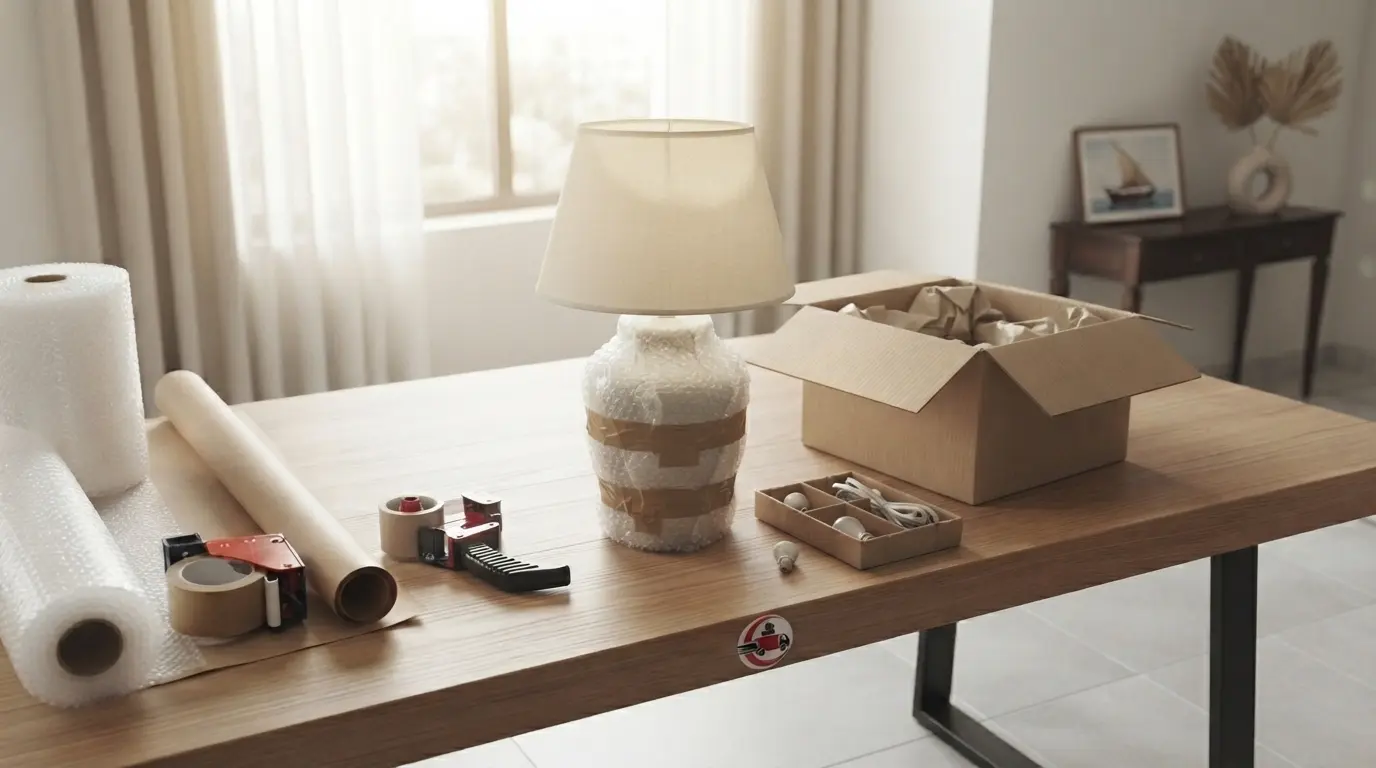
Lamps can be awkward to pack because they combine several different components in one item. A lamp may have a heavy base, a delicate shade, a removable bulb, an electrical cord and small fittings that are easy to lose. Decorative lighting may also include glass panels, crystals or unusual shapes that need extra attention.
The safest approach is to prepare each component separately, protect its vulnerable surfaces and choose packaging that prevents movement. Knowing how to pack lamps and lighting fixtures safely can help reduce the risk of broken shades, scratched finishes, damaged sockets and missing hardware.
Why Lamps and Lighting Fixtures Need Special Care
Unlike many ordinary household items, lamps contain parts that react differently to pressure and movement.
- Lamp shades: Fabric, paper and glass shades can tear, crack, bend or lose their shape.
- Lamp bases: Ceramic, glass and decorative finishes can chip or scratch.
- Light bulbs: Bulbs may break if they strike other objects inside a box.
- Cords and plugs: Loose cords can become tangled or pull against connections.
- Small fittings: Finials, screws, shade holders and other detachable parts can easily get lost.
- Specialty fixtures: Chandeliers and pendant lights may have fragile glass components or complicated assemblies.
Each part should be packed according to its shape, material and condition. Wrapping an entire assembled lamp in one layer of cushioning is often less effective than separating and protecting its individual components.
Gather the Right Packing Materials
Prepare the materials before taking a lamp apart. This reduces the chance of leaving delicate components exposed while searching for packaging.
Useful supplies include:
- Sturdy cardboard boxes in suitable sizes
- Clean packing paper
- Bubble wrap or suitable cushioning material
- Soft protective material for delicate finishes
- Packing tape
- Twist ties or soft cord ties
- Small sealable bags for removable hardware
- Labels and a permanent marker
- Original packaging, where available
Choose materials according to the item. A fabric shade may need gentle cushioning that preserves its shape, while a heavy ceramic base needs protection against impact and movement. Avoid using tape directly on delicate finishes or surfaces that may be damaged by adhesive.
Prepare Lamps Before Packing
Start by switching off and unplugging the lamp. If it has been in use, allow the bulb and surrounding components to cool completely before handling them.
Next, remove the bulb and lampshade if they are designed to come off. Detach other removable components, such as a shade holder or decorative finial, only when it is safe and straightforward to do so.
Keep small parts together in a labelled bag. If the lamp has an unusual assembly, take a photograph before disassembling it so you have a reference when putting it back together.
Coil the electrical cord loosely and secure it with a soft tie. Avoid pulling tightly on the cord or placing stress on its connection to the lamp. Do not attempt to dismantle electrical wiring or fixed fittings as part of ordinary packing.
How to Pack Lamp Bases
Lamp bases vary in weight, shape and material, so the amount of protection they need will differ.
- Inspect the base for loose components, existing cracks or delicate decorative details.
- Wrap the base with clean packing paper or suitable protective cushioning.
- Add extra protection around vulnerable edges and projecting parts.
- Place the wrapped base in a sturdy box with cushioning underneath.
- Fill the gaps around it so it cannot slide or strike the sides of the box.
- Check that the box can support the item's weight and close without putting pressure on the lamp.
Heavy bases may need a stronger box than lightweight table lamps. Glass and ceramic bases require particular care around narrow sections and edges. Do not place loose bulbs, tools or other hard objects inside the base's packaging where they could cause damage.
How to Protect Lamp Shades
Lamp shades are often among the most vulnerable parts of a lighting fixture. Their shape can be easily distorted by pressure, and some materials are difficult to repair once damaged.
Remove the shade from the lamp before packing it if the design allows. Wrap it gently with clean packing paper or another suitable protective material. Avoid squeezing the shade to make it fit a smaller box.
Choose a box that provides enough space around the shade for cushioning. Support the shade so it cannot move freely, but do not pack it so tightly that the sides or rim become compressed.
For fabric and paper shades, avoid materials that could transfer ink, leave marks or catch on the surface. Glass shades need cushioning that protects them from impacts on every side.
If nesting compatible shades is necessary, do so only when their shapes and materials allow it. Place a protective layer between them and never force one shade into another. Pack particularly delicate or valuable shades individually.
Pack Light Bulbs, Cords and Small Parts
Remove light bulbs before packing a lamp. Allow them to cool, then wrap each bulb separately using appropriate cushioning. Place the wrapped bulbs in a small, sturdy container with enough protection to prevent them from knocking against each other.
Where practical, use dividers to separate bulbs. Avoid placing them loosely among heavier lamp components.
Keep the cord coiled loosely and secured with a soft tie. Protect the plug from bending or scraping other surfaces. Never pull the cord tightly around a delicate base or use adhesive tape on a finished surface simply to keep it in place.
Place small removable fittings in a labelled bag. Identify the lamp they belong to, then keep the bag with the relevant packed components without allowing it to scratch the item.
Packing Floor Lamps and Tall Fixtures
Floor lamps can be difficult to package because of their height, narrow sections and long components. If the lamp has detachable sections, separate them only as the manufacturer intended.
Protect each section individually, paying attention to joints, decorative finishes and any projecting parts. A long, sturdy box may be appropriate for some components, while other designs may require separate packaging.
Avoid bending a lamp pole to make it fit a box. Do not place heavy items against a tall lamp or allow the package to lean unsupported. The box should be stable and adequately cushioned so the contents cannot shift during handling.
If the lamp is unusually large, fragile or valuable, consider asking a qualified packing professional about suitable protection before attempting to dismantle it. For this, you can explore our packing service in Abu Dhabi.
How to Handle Chandeliers and Delicate Lighting
Chandeliers, pendant lights and decorative fixtures may contain glass pieces, crystals, delicate frames or fixed electrical connections. They should not automatically be treated like ordinary table lamps.
If a fixture is still installed, switch off the appropriate power supply and use a qualified electrician when removal requires electrical work. Do not disconnect fixed wiring unless you are qualified to do so.
For fixtures that have already been safely removed, document the arrangement before separating any detachable components. Wrap removable decorative pieces individually and protect the frame with suitable cushioning. For additional guidance, see how to pack fragile items safely.
Use packaging that supports the fixture without pressing against fragile projections. Valuable, antique or unusually complicated lighting may need specialist packing or a custom enclosure. Follow manufacturer instructions where available.
Load and Transport Packed Lighting Carefully
Packing is only one part of protecting lighting during a move. Boxes must also be positioned so that their contents remain secure.
- Place heavy lamp-base boxes on a stable surface that can support their weight.
- Keep delicate shade boxes away from heavy items that could crush them.
- Secure boxes to prevent sliding during transportation.
- Keep labels visible so handlers can identify fragile contents and the correct orientation.
- Avoid exposing sensitive lighting components to moisture or extreme environmental changes.
Do not assume that a fragile label alone will prevent damage. Proper cushioning, a suitable box and stable loading are all important.