
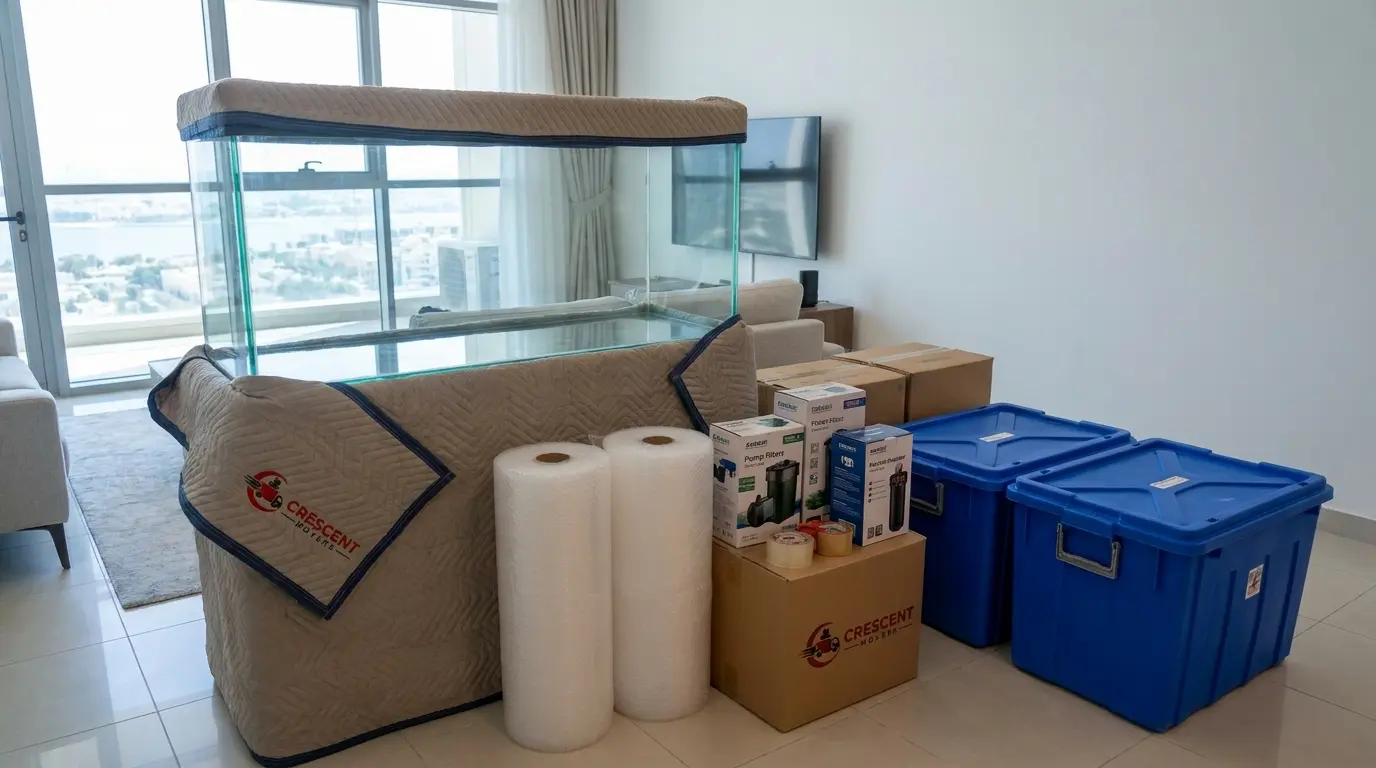
How to Prepare a Home Aquarium for Relocation
Moving a home aquarium takes more planning than moving ordinary household belongings. The tank, its equipment, water, plants, and aquatic animals all need different preparation. A careful plan can help reduce disruption and make it easier to set the aquarium up again at your new home.
The safest approach is to plan the aquarium move separately from the rest of your household move. Decide where the tank will go, prepare suitable transport containers, and arrange how you will keep the aquarium’s inhabitants safe during the journey.
1. Plan the aquarium’s new location first
Before moving day, choose the exact place where the aquarium will be set up. Check that the stand is stable, the floor is level, and the area has access to the electrical supply the equipment requires.
Measure the route from the entrance to the planned location. Check doorways, corridors, corners, stairs, and lift access for any tight turns or restrictions. A tank that fits in a room may still be difficult to move through the property.
For larger aquariums, plan the move well in advance and arrange suitable help. Do not assume that a filled aquarium can be safely lifted or carried.
2. Get advice for the fish and other aquatic life
The needs of aquarium inhabitants can vary by species, tank size, journey length, and water conditions. Before moving day, ask an experienced aquarium professional or aquatic veterinarian how to transport your particular fish, plants, and other inhabitants.
Confirm:
- Which containers are appropriate for the animals
- Whether aeration or temperature control is needed
- How to minimize the time they spend in transport
- What water and equipment should be prepared at the destination
- Whether any species require special handling
Do not improvise transport methods for sensitive or valuable aquatic animals.
3. Gather the right supplies
Prepare the supplies recommended for your aquarium and its inhabitants before moving day. Depending on the setup, these may include:
- Clean, suitable transport containers with secure lids
- Appropriate water containers
- Water conditioner and other usual aquarium supplies
- Battery-powered aeration equipment, if recommended
- Towels and floor protection
- Protective materials for the empty tank
- Labels or notes to identify containers and equipment
Specialist aquarium guidance emphasizes preparing the new location, suitable containers, and necessary equipment before the move.
INJAF+1
4. Keep the aquarium move separate from general packing
Do not leave the aquarium until the last moment without a plan. Its preparation and setup may take longer than ordinary packing, and the animals’ needs should guide the schedule.
Create a short aquarium-specific checklist with the person responsible for each task. Include the order of preparation, transport arrangements, and the steps needed to restart the aquarium at the destination.
Keep the aquarium supplies together so they are easy to find. Avoid packing essential equipment into general household boxes.
5. Prepare the aquarium and its inhabitants carefully
Follow the transport plan recommended for your particular aquarium. Do not use a one-size-fits-all method for every tank or species.
The tank itself should be handled separately from its inhabitants and prepared for safe transport. Never attempt to move a filled aquarium: water and substrate add substantial weight, and movement can place stress on the tank.
For a large, heavy, custom-shaped, or delicate aquarium, seek experienced help with the tank and equipment. If you are unsure how to prepare any part of the setup, ask an aquarium specialist before proceeding.
6. Protect the tank and equipment
Once the aquarium has been prepared for transport, protect the empty tank from impact and pressure. Use suitable padding and keep it secure so it cannot slide or tip during the journey.
Keep equipment organized and protected. Label cables, filters, lighting components, and other parts so you can identify them during setup.
Do not place heavy belongings on top of the aquarium or its equipment. Keep fragile components separate from items that could crush or scratch them.
7. Plan the journey and arrival
Choose a route that allows the aquarium and its inhabitants to be transported as directly and calmly as possible. Consider the time needed to load, travel, unload, and set up the tank.
Avoid leaving aquatic animals waiting in transport containers longer than necessary. If the journey is likely to be long, ask an aquarium professional what additional precautions are appropriate.
Before leaving, make sure the destination is ready for the aquarium. Having the setup area prepared can reduce the time spent handling the animals and equipment after arrival.
8. Set up the aquarium at the new home
Follow the setup sequence recommended for your aquarium. Check that the stand is stable and level before positioning the tank. Reconnect equipment according to its instructions, and confirm that the aquarium is operating as expected before completing the move.
Do not assume the aquarium is ready simply because the tank is in place. Monitor the inhabitants and water conditions closely after the move, and seek specialist advice if you notice signs of distress or equipment problems.
Common mistakes to avoid
- Leaving aquarium planning until moving day
- Assuming every fish or aquatic animal can be transported the same way
- Moving a filled aquarium
- Forgetting to prepare the destination before arrival
- Packing essential aquarium equipment in inaccessible boxes
- Guessing about species-specific transport or water-care requirements
A little preparation can help prevent avoidable delays and reduce disruption to the aquarium.
Final aquarium moving checklist
Before the move, confirm that:
- The aquarium’s new location is ready
- The route to the new location has been checked
- Transport guidance has been obtained for the aquarium’s inhabitants
- Suitable containers and supplies are prepared
- The aquarium and equipment have a safe transport plan
- The destination setup can be completed promptly
- A responsible person is available to oversee the aquarium throughout the move
Moving an aquarium is a specialized task. Plan it separately from general household packing, and get expert advice whenever the requirements of your tank or its inhabitants are uncertain.
If you are planning a household move in Abu Dhabi
Crescent Movers can discuss your overall moving requirements. Aquarium transport and aquatic animal care should be arranged with an appropriate aquarium specialist.
Visit Crescent MoversFrequently asked questions
Can I move an aquarium with water still inside?
Do not attempt to move a filled aquarium. Water adds substantial weight and movement can stress or damage the tank. Follow specialist guidance for preparing the tank and transporting its inhabitants.
Should I move my fish in the aquarium?
The appropriate method depends on the species, tank, and journey. Ask an experienced aquarium professional or aquatic veterinarian how to transport your particular fish safely.
How early should I plan an aquarium move?
Plan well before moving day. You need time to prepare the destination, gather suitable supplies, and confirm the transport method for the aquarium’s inhabitants.
What should I check at the new home before moving the tank?
Confirm that the stand is stable, the floor is level, the route is clear, and the necessary electrical supply is available. For larger tanks, check access and turning space in advance.
Can I pack aquarium equipment with ordinary household items?
Keep essential aquarium equipment together and easy to access. Protect fragile components and label them so they can be identified during setup.
Should I get professional help to move a large aquarium?
For large, heavy, custom-shaped, or delicate tanks, seek experienced help. Aquarium specialists can also advise on transporting the inhabitants and restarting the setup.