Moving home involves more than packing furniture and household boxes when you own an aquarium. A fish tank contains living animals, aquatic plants, water, filtration equipment and a delicate biological environment. Moving these parts without a plan can put fish under stress, damage the tank or interrupt the filtration system.
The safest approach is to prepare the aquarium separately from your normal household packing. Plan where it will go in the new home, arrange suitable containers for its inhabitants, protect the filter media and make sure the tank is completely empty before transporting it.
This guide explains how to prepare a home aquarium for relocation, what to organize before moving day and what to check after setting it up again.
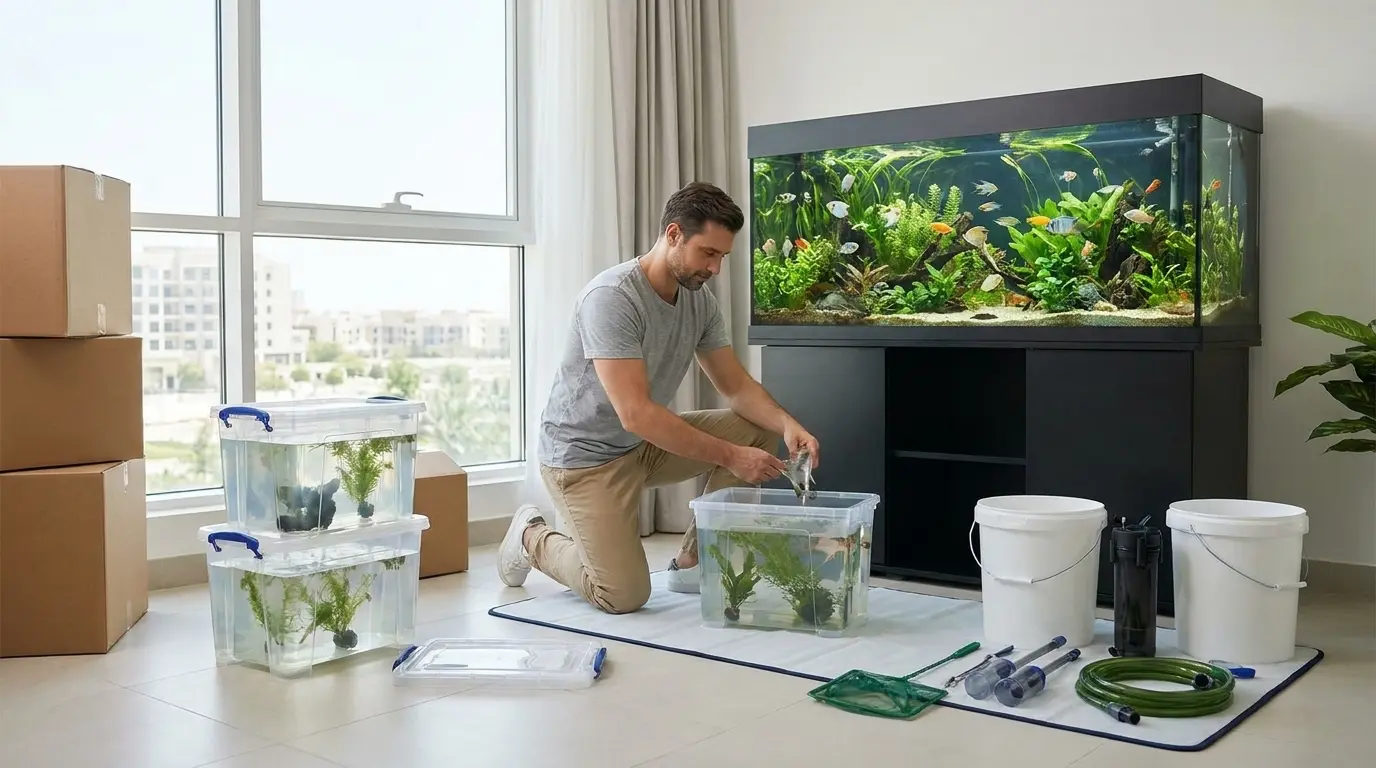
An aquarium is not an ordinary piece of furniture. Fish depend on suitable water conditions, temperature and oxygen, while beneficial bacteria in the filter help process waste.
A move can disturb this environment. Water movement, temperature changes, overcrowded transport containers and a filter that dries out can all create problems.
The glass tank also needs special attention. Carrying it with water, gravel or heavy decorations inside can place uneven pressure on the glass and its joints. The aquarium should be emptied and packed separately from its living contents.
The aim is to move the fish and equipment safely while preserving as much of the established aquarium environment as practical.
Before dismantling anything, decide exactly where the aquarium will be installed in the new home.
Check the following:
If you are moving into an apartment or managed community in Abu Dhabi, check any relevant building access, lift booking, parking and loading arrangements in advance. These arrangements vary by property, so confirm them with building management.
Collect the required equipment before moving day. Searching for containers or a fish net while the aquarium is being dismantled can make the process unnecessarily stressful.
| Item | Why it is needed |
|---|---|
| Clean, secure-lid buckets | Transporting tank water, substrate and equipment |
| Suitable fish bags or containers | Moving fish and other aquatic animals |
| Insulated cooler or fish transport box | Helping maintain a stable transport environment |
| Battery-powered air pump | Providing aeration when required |
| Fish net | Carefully transferring fish |
| Water conditioner | Preparing replacement water when appropriate |
| Towels and blankets | Protecting the empty tank and surrounding surfaces |
| Siphon hose | Removing aquarium water |
| Waterproof containers | Separating decorations, plants and substrate |
| Water test kit | Checking water quality after setup |
Choose containers that are clean and have not been used for detergents, chemicals or household cleaning products. Use equipment suitable for the species and journey duration.
For a large, heavily stocked or specialist aquarium, ask an experienced aquarist or aquatic shop to advise on the transport arrangements.
Fish should not be left in the aquarium while the tank is being lifted or transported. They need suitable temporary containers with appropriate water conditions.
Before moving day:
For some fish, suitable transport bags may be appropriate. Larger fish, species with sharp fins or animals that should not be crowded may need different containers.
Do not put incompatible or aggressive fish together simply to reduce the number of containers. Avoid overcrowding and ensure that lids or bags are secured properly.
For a longer journey, ask an aquatic specialist whether oxygen packing, battery-powered aeration or temporary boarding is appropriate. The correct method depends on species, size, water conditions and travel duration.
The filter is one of the most important parts of an established aquarium. Beneficial bacteria living in the filter media help process fish waste and maintain water quality.
If filter media dries out or is exposed to unsuitable conditions, the biological balance may be affected.
To protect it:
Do not wash biological filter media with untreated tap water or replace it unnecessarily during the move. Follow the filter manufacturer's instructions and seek aquarium-specific advice if you use a complex filtration system.
The Royal Veterinary College explains that nitrifying bacteria commonly live in aquarium filters and substrate and help convert harmful ammonia into nitrite and then nitrate.
Royal Veterinary College
Once the fish and other aquatic life have been transferred to suitable containers, prepare the tank itself.
A practical sequence is:
Never transport the aquarium with water or gravel inside it. Even a relatively small amount of water can move during lifting and place stress on the glass and seals. Aqueon's aquarium moving guide specifically advises emptying the tank before transport.
aqueon.com
Wrap the empty aquarium in suitable moving blankets or protective padding. Keep heavy equipment and loose decorations separate so they cannot strike the glass.
Explore Crescent Movers' house moving services in Abu Dhabi and packing services for your household belongings.

The aquarium, fish, plants, water and equipment should be treated as separate loads.
Keep fish containers upright, stable and protected from direct sunlight. Avoid leaving them in a hot parked vehicle. In warm weather, temperature control becomes particularly important, especially during delays.
Keep aquarium plants in suitable moist or water-containing containers according to their species. Pack rocks and decorations separately from fish to prevent movement or injury.
For the tank itself:
If the tank is large, custom-shaped or particularly valuable, consider professional aquarium handling rather than treating it like a standard household item.
At the new home, prepare the aquarium before transferring fish into it.
Start by checking the stand and confirming that the floor and support are level and stable. Position the empty tank and make sure the equipment can be connected without difficulty.
Then:
Do not assume that the aquarium is ready for fish just because it has been filled. Check the water conditions and make sure the filtration system is functioning.
When the water temperature and other conditions are suitable, acclimatize the fish carefully. The method should reflect the species and the difference between transport water and the aquarium water.
The work does not finish when the tank is filled. The aquarium may need close attention over the following days because transport and reassembly can disturb its biological balance.
Monitor:
Test the water regularly after the move, particularly during the first week. If ammonia or nitrite rises, seek advice from an experienced aquarist and take appropriate corrective action.
Avoid overfeeding while the aquarium is settling. Keep lighting and feeding routines appropriate for the fish and plants, and avoid adding new fish immediately after a stressful relocation.
The Royal Veterinary College highlights the importance of monitoring ammonia, pH and the aquarium nitrogen cycle because changes can affect aquatic animal health.
Royal Veterinary College
| Mistake | Why it matters |
|---|---|
| Carrying a tank with water inside | Can stress the glass and seals |
| Allowing filter media to dry out | Can affect beneficial bacteria |
| Overcrowding fish containers | Can create unsuitable transport conditions |
| Leaving fish in a hot vehicle | Can expose them to dangerous temperature changes |
| Forgetting to plan the new tank location | Can delay setup after arrival |
| Releasing fish before checking water conditions | Can expose them to unsuitable water |
| Packing heavy decorations with fish | Objects may shift and injure animals |
A little preparation can prevent many avoidable problems. The most important tasks are planning the destination, arranging suitable fish transport, protecting filter media and setting up the aquarium carefully.
Some aquariums are more complicated to move than others. A small freshwater tank may be manageable with careful preparation, while a large marine aquarium, reef setup, heavily stocked tank or specialist system may require experienced assistance.
Consider getting specialist advice when:
An aquarium specialist can advise on species-specific transport, water conditions and restarting the system. Do not assume that a general household moving crew is trained to handle live fish or specialist aquarium equipment.
Preparing a home aquarium for relocation requires a separate plan from ordinary household packing. Fish need suitable transport conditions, filter media should be protected, and the empty tank must be packed carefully.
Plan the new location before moving day, prepare the right containers and equipment, and give the aquarium time to settle after setup. If your system is large or complex, get advice from an experienced aquarium professional before dismantling it.
For the household side of your relocation, you can explore Crescent Movers and its packing services in Abu Dhabi.
No. The aquarium should be emptied before it is transported. Water and substrate can shift during lifting and place stress on the glass and seals.
Use suitable fish bags or secure containers with water conditions appropriate for the species. Keep the containers stable, protected from direct sunlight and at a suitable temperature. Longer journeys may require aeration or specialist packing.
Yes. Biological filter media should be kept wet in suitable aquarium water and reinstalled promptly. Drying it out or exposing it to unsuitable water can affect beneficial bacteria.
Some saved aquarium water may be reused if it has been stored in clean, suitable containers. However, saved water alone does not preserve the aquarium's biological filtration. Check the water conditions before returning fish.
There is no single safe duration for every fish. It depends on species, container size, oxygen availability, temperature, stocking density and journey conditions. Ask an aquatic specialist to plan longer journeys.
Aquarium moving guides commonly recommend withholding food for a period before transport to reduce waste in the containers. The suitable period depends on the species and its condition, so get species-specific advice rather than applying one rule to every fish.
Check water temperature, filter operation, ammonia and nitrite levels, and fish behaviour. Continue monitoring during the first days and respond appropriately if water quality changes.
It is sensible to consult an aquarium specialist for large, complex, marine or heavily stocked aquariums. They can advise on suitable containers, aeration, temperature control, filtration and acclimatization.