
How to Move a Pool Table Without Damaging Its Components
A pool table is made up of several parts that need careful attention during relocation. Its playing surface, felt, cushion rails, pockets, frame and legs can all be damaged if the table is lifted, dismantled or transported incorrectly.
The most important thing to understand is that moving a pool table is not the same as moving an ordinary dining table. Slate models can be extremely heavy, and their playing surfaces need proper support. The cloth can tear or crease, while rails, pockets and small hardware can be misplaced during disassembly.
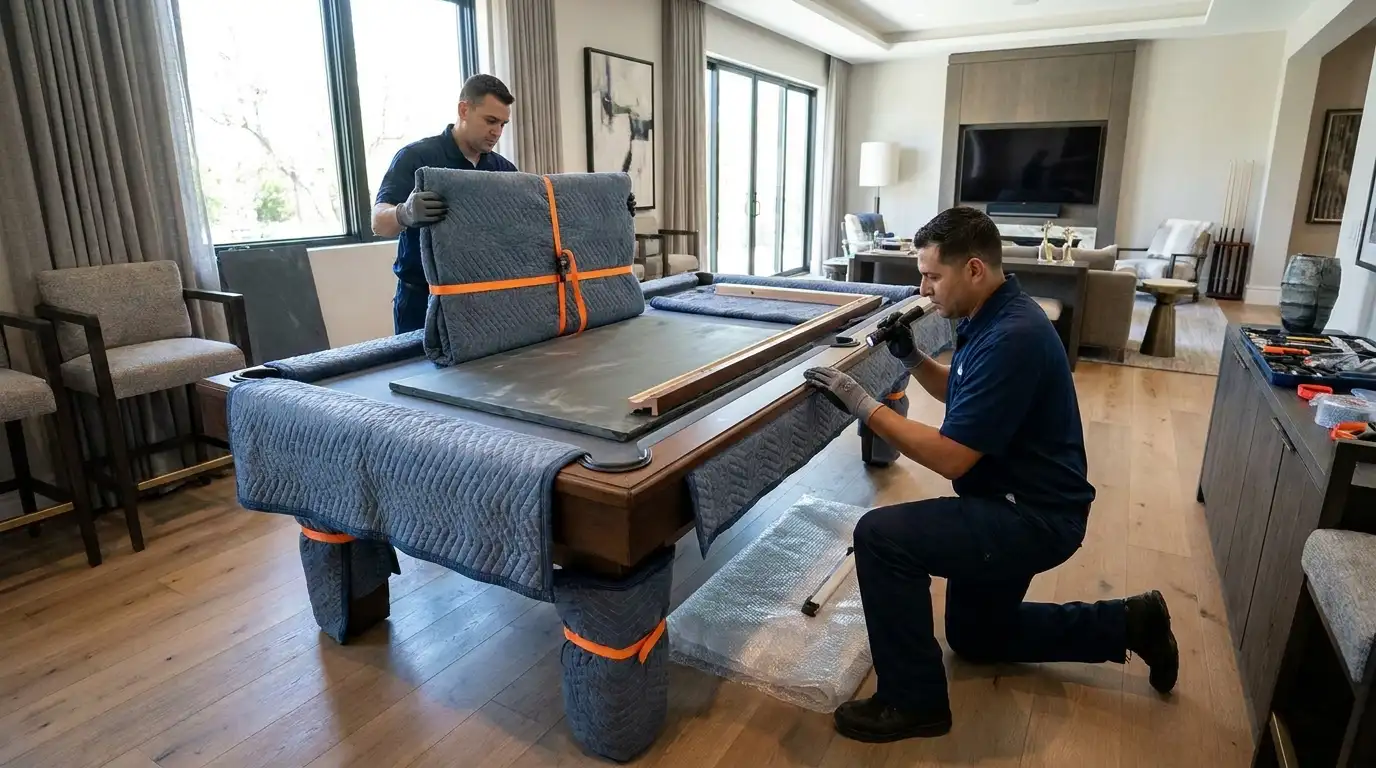
Before moving the table, identify its construction, check the manufacturer's instructions and plan how each component will be protected. Some tables require specialist dismantling and reassembly, so attempting the work without the right knowledge or equipment can create unnecessary risks.
This guide explains how to prepare a pool table for relocation, protect its main components and identify when professional billiard-table assistance may be necessary.
Why does a pool table need special care during a move?
A pool table is designed to provide a stable and level playing surface. Its components work together to maintain the correct alignment and playing characteristics.
A typical table may include a slate or other playing bed, cloth, cushion rails, pockets, a supporting frame, legs and fixing hardware. Damage to one part can affect the appearance, stability or performance of the complete table.
For example:
- Slate: Heavy and brittle, with edges that can chip and surfaces that can crack if unsupported.
- Felt or cloth: Can tear, crease, stretch or become dirty during handling.
- Rails and cushions: Can be scratched, loosened or damaged if dropped or stacked incorrectly.
- Pockets: Can become detached, torn or misshapen.
- Frame and legs: Can be scratched, weakened or misaligned by uneven lifting.
- Bolts and fittings: Small parts can be lost or mixed up, making reassembly difficult.
The goal is to protect each component separately and preserve the table's alignment when it is installed again.
1. Understand the pool table components before moving
Start by identifying the construction of your particular table. Not every pool table uses the same materials or assembly method.
Some tables have a multi-piece slate bed, while others use a different playing-surface material. The frame, rail attachments, pockets and cloth fixing methods can also vary.
Before starting:
- Identify the make, model and approximate age of the table.
- Check whether the playing surface is slate, MDF or another material.
- Look for the manufacturer's assembly and care instructions.
- Photograph the table from several angles.
- Take close-up photographs of rail connections, pockets, leg fittings and visible hardware.
- Make a note of existing damage or loose components.
These records can help identify where individual parts belong during reassembly. They can also help distinguish pre-existing damage from problems noticed after the move.
2. Check manufacturer instructions and warranty conditions
Do not assume that every pool table can be dismantled in the same way. The position of bolts, pockets, rails, slate sections and frame supports depends on the model.
Check the manufacturer's guidance before removing any component. If the table is covered by a warranty, read its moving and servicing conditions as well.
Some manufacturers require an authorized dealer or agent to move or service their tables. For example, Olhausen's published warranty specifies authorized dealer or agent involvement for moving or servicing its tables. Check the conditions that apply to your own model before arranging the work.
If the instructions are unavailable, the table has an unusual construction or you are uncertain about its assembly, consult a qualified pool-table technician before dismantling it.
3. Prepare the room and moving route
Planning the route before dismantling the table can prevent delays and handling problems.
Measure the access points between the current room and the moving vehicle, as well as the route into the destination room.
Check:
- Doorway width and height
- Hallway clearance
- Staircase width and landings
- Lift dimensions and door openings
- Tight corners and turns
- Floor surfaces and level changes
- Parking and loading access
Remember that the table's individual components may need different routes. A large slate section, for example, may be more difficult to manoeuvre than the frame or legs.
For apartment and managed-community moves in Abu Dhabi, confirm relevant lift bookings, loading access and building arrangements with management. These requirements can vary between properties.
For further preparation, see this guide on
.
4. Protect the felt, rails and pockets
The playing cloth and cushion rails need protection because damage to these components can affect the table's appearance and playing experience.
If the felt is being removed, follow the table manufacturer's instructions or ask a pool-table specialist to handle it. Some cloth is stapled, while other designs use different fixing methods. Removing it carelessly can cause tears or make it unsuitable for reuse.
For the rails and pockets:
- Photograph their original positions before removal.
- Keep each rail identified according to its original location.
- Protect cushion surfaces from pressure and impact.
- Wrap wooden and finished surfaces in suitable protective material.
- Keep pockets separate from heavy components.
- Avoid placing tools or loose hardware on the cloth.
Do not assume that old felt can always be reused after relocation. Its condition, attachment method and the process required to reinstall it will affect whether it can be retained.
5. Handle the slate playing surface carefully
The slate is one of the most important components of a slate pool table. It provides the playing surface and needs to remain properly supported.
Slate is heavy but brittle. A sudden impact, unsupported edge or uneven lifting force can cause chips or cracks.
Important precautions include:
- Do not attempt to lift heavy slate sections alone.
- Use suitable lifting equipment and enough trained help.
- Keep the carrying route clear before lifting.
- Protect the edges and corners from impact.
- Avoid dragging slate across the floor.
- Do not place tools or other heavy objects on top of it.
- Keep each section supported during loading and transport.
Some tables use multiple slate sections, while others have a different configuration. Follow the manufacturer's instructions for removing and supporting the playing bed.
Do not copy a lifting method from another table without confirming that it is suitable for yours. If you are unsure how the slate is secured or supported, stop and consult a specialist.
6. Protect the frame, legs and hardware
After the playing surface and other detachable components have been addressed, the frame and legs also need careful preparation.
These parts provide the table's structural support. Incorrect handling or missing fittings can affect stability during reassembly.
Before packing:
- Photograph the leg and frame connections.
- Identify the position of each detachable section.
- Keep matching bolts, washers and brackets together.
- Place small hardware in labelled bags.
- Wrap finished wood and metal surfaces with suitable padding.
- Keep frame components separate from fragile slate and cloth.
Use labels that clearly identify the component and its original position. A simple hardware inventory can make it easier to identify missing parts when the table is assembled again.
7. Transport pool table components separately
Once the table has been prepared, arrange the components so that they remain protected during loading and transportation.
Avoid allowing parts to slide, collide or become compressed by other household belongings.
Consider the following precautions:
| Component | Transport consideration |
|---|---|
| Slate | Keep fully supported and protected from impact |
| Felt | Keep clean and protect it from tearing or creasing |
| Rails | Cushion finished surfaces and protect cushion edges |
| Pockets | Keep separate from heavy items |
| Frame | Wrap exposed surfaces and prevent movement |
| Legs | Protect corners, finishes and fixing points |
| Hardware | Store in labelled, secure containers |
Use suitable padding between components and secure them so they cannot shift during the journey. The correct orientation and support method for slate depends on the table and transport equipment, so follow specialist or manufacturer instructions rather than relying on a universal rule.