
How to Prepare a Refrigerator and Washing Machine Before Moving
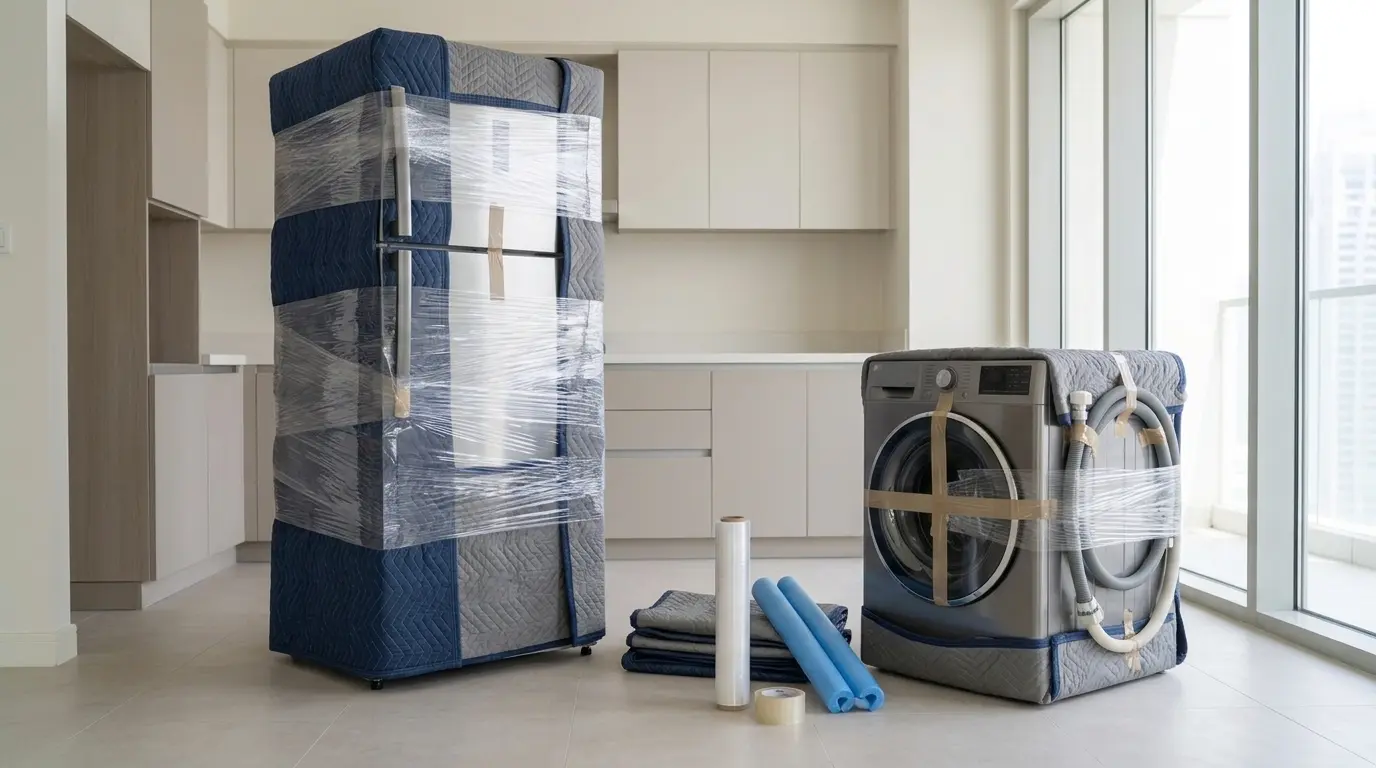
A refrigerator may look ready to move once the food has been removed, and a washing machine may appear prepared once its cycle has finished. However, both appliances can retain water, contain removable parts that may shift during transport, and require specific precautions before being moved.
Preparing them properly helps reduce the risk of leaks, unpleasant smells, scratched surfaces and damage caused by unsecured internal components. The exact process depends on the appliance model, so always check the manufacturer's instructions before disconnecting or transporting either machine.
This guide explains how to prepare a refrigerator and washing machine before moving, what to do before the moving team arrives, and which tasks may require a qualified technician.
Why should you prepare appliances separately?
Large household appliances are different from ordinary boxes and furniture. Refrigerators contain cooling systems and may have water connections, ice makers or removable shelves. Washing machines contain hoses and internal drums that may need to be secured for transport.
Simply unplugging an appliance does not necessarily make it ready to move.
A useful approach is to divide preparation into four stages:
- Empty and clean: Remove contents and clean the appliance interior.
- Disconnect and drain: Isolate power and water connections safely.
- Secure and protect: Prepare removable parts, cords, hoses and doors.
- Plan transport and setup: Check the route, handling requirements and installation instructions.
Starting early gives the appliance time to dry and lets you identify any connections or transport hardware that need attention.
How to prepare a refrigerator before moving
Refrigerators need time for food removal, defrosting where applicable, cleaning and drying. If your model includes an ice maker or water dispenser, its water supply must also be handled according to the manufacturer's instructions.
1. Empty the refrigerator and freezer
Remove food, drinks, ice trays and other contents. Plan how to use or safely store perishable food before the appliance is switched off. Do not leave food inside during transport.
Remove ice from the ice bin and follow the manual for switching off an automatic ice maker. If the refrigerator has a water dispenser, check whether it has a connected water line.
2. Defrost the appliance when required
If your refrigerator or freezer needs manual defrosting, allow enough time for the ice to melt before moving day. The time required varies by model and the amount of ice present.
Place towels or suitable absorbent material around the appliance to catch water. Keep the floor dry to reduce slipping risks, and never chip away ice with sharp tools that could damage the appliance.
Some frost-free models still need to be switched off and dried before transport. Follow the manufacturer's guidance rather than assuming every refrigerator needs the same defrosting period.
3. Clean and dry the interior
Wipe shelves, drawers and interior surfaces using a cleaning method suitable for the appliance. Dry all surfaces thoroughly before transport.
Moisture trapped inside a closed refrigerator can contribute to unpleasant smells. If the appliance will remain switched off after arrival, follow the manufacturer's instructions for storing it safely, including any guidance about keeping doors ajar when appropriate.
4. Disconnect water lines and protect loose parts
If your refrigerator has an ice maker or water dispenser, the water connection may need to be shut off and disconnected. If you are not sure how to isolate the supply or disconnect a fitting, ask a qualified technician or plumber.
Remove loose shelves, trays and drawers when the manual recommends doing so. Wrap and pack these parts separately, or secure them as directed by the manufacturer. Secure the power cord so it cannot drag under the appliance or catch on anything.
5. Protect the exterior and plan upright transport
Use suitable protective materials to reduce the risk of scratches and dents. Check the refrigerator's height, width and depth against doorways, hallways, lift doors and the loading route.
Refrigerators are generally best transported upright, but the correct handling method depends on the model. Follow the owner's manual, and do not assume a refrigerator can safely be laid on its side.
Manufacturer guidance: Whirlpool's refrigerator moving instructions and GE Appliances' refrigerator moving instructions.
How to prepare a washing machine before moving
Washing machines can retain water in their hoses, filters and internal drainage system. They also contain a drum that may need transport bolts or other restraints to prevent movement during transit.
1. Remove laundry and finish the cycle
Check the drum and remove all clothing. If appropriate for your model, run the recommended drain or spin cycle to remove as much water as possible.
Leave the door open for a while, where the manufacturer's instructions allow, so the drum can dry. If the machine already has a leak or drainage problem, do not assume a normal cycle will remove all the water.
2. Turn off the water supply and disconnect hoses
Switch off the appliance and disconnect it from the electrical supply before handling its connections. Close the water supply valves, then disconnect the inlet hoses according to the manual.
Keep a shallow tray, bucket and towels nearby because water may remain inside the hoses. Drain them carefully and secure them so they do not leak onto other belongings during transport.
The drain hose may also contain residual water. Follow the manufacturer's instructions for removing and draining it without damaging the connection.
3. Check the drain filter instructions
Some washing machines have an accessible drain filter or emergency drain tube. Others use different designs. Consult the manual before opening any filter or drain access panel.
If your model allows you to drain residual water through a filter, prepare a shallow container and towels first. Water may come out quickly, so open the access point slowly and follow the manufacturer's steps.
4. Install transit bolts if required
Many front-loading washing machines use transit bolts to secure the drum during transportation. These bolts are often removed during the original installation and kept for future moves.
Check the manual to see whether your model requires them and where they fit. Do not improvise with random screws or force hardware into place. If the required bolts are missing, contact the manufacturer or a qualified appliance technician for the correct solution.
Bosch explains the importance of securing the drum and draining hoses in its guide: Moving a washing machine.
5. Secure the door, hoses and power cord
Once the machine is empty and prepared, secure loose hoses and the power cord so they cannot snag or drag. Protect the outer surfaces with suitable materials, and keep any small parts or transit hardware together in a labelled bag.
Keep the machine upright during transport unless its manufacturer specifies another approved method. Use suitable moving equipment and do not attempt to lift a heavy washing machine without enough capable assistance.
Who should disconnect the appliances?
You can usually handle straightforward preparation such as removing food, cleaning the interior and gathering loose parts. However, electrical, plumbing and gas connections require more care.
- Refrigerator: Water lines for ice makers and dispensers may need to be isolated and disconnected.
- Washing machine: Inlet and drain hoses need to be disconnected and drained correctly.
- Hard-wired appliances: Electrical disconnection may require a qualified electrician.
- Gas-connected appliances: Arrange a qualified gas professional; do not disconnect gas lines yourself.
Before the moving team arrives, confirm which tasks you will complete and which tasks require a technician. Do not assume transportation automatically includes appliance disconnection, installation or reconnection.