
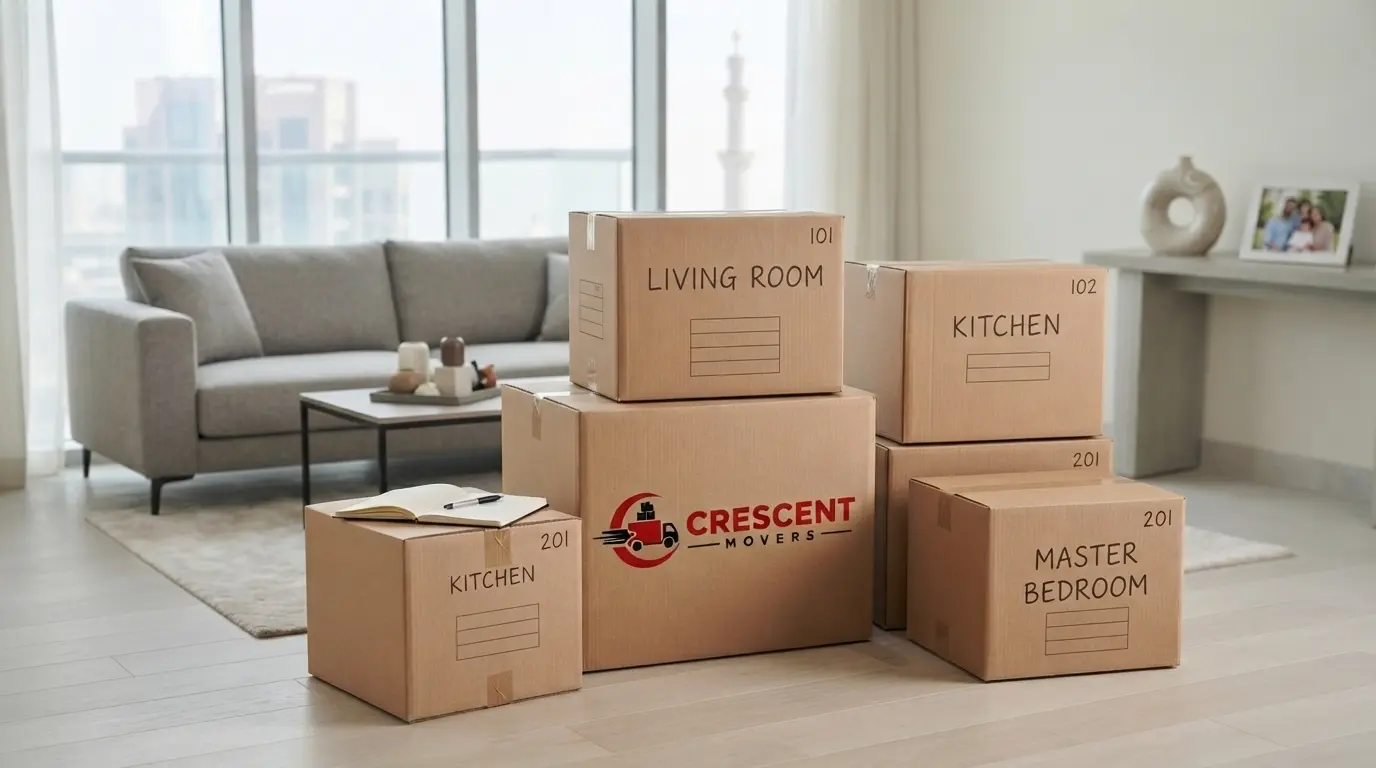
How to Create a Moving Box Inventory and Numbering System
When you pack for a move, it is easy to remember what went into the first few boxes. The problem usually starts when several rooms are packed, cartons are stacked together, and you need one particular item without opening everything.
A moving box inventory system helps solve this problem. By giving each box a unique number and recording its destination room and main contents, you can find belongings more easily, monitor packing progress, and direct boxes to the correct rooms at your new home.
You do not need specialist software to get started. A marker, clear labels, and a simple notebook or spreadsheet are enough for most household moves. The important part is to use the same system consistently from the first box to the last.
1. Why Use a Moving Box Inventory System?
An inventory connects each physical box to a record that describes what is inside. Instead of relying on memory or opening several similar cartons, you can check the box number and consult your list.
A simple system can help you:
- Find belongings faster: Search your list for a particular item or category before opening boxes.
- Keep rooms organized: Identify the destination room so boxes can be placed where they belong.
- Monitor packing progress: See which boxes are finished and which still need attention.
- Prioritize unpacking: Identify the boxes containing essentials for the first day or night.
- Check deliveries: Compare your inventory with the boxes unloaded at the destination.
An inventory does not need to list every individual object. The aim is to record enough information to identify a box reliably. For example, “Kitchen — mugs, coffee filters and small utensils” is more helpful than “Kitchen stuff.”
2. Choose a Simple Box Numbering Format
Start by choosing one numbering method and use it throughout the move. A basic sequential system is easy to maintain:
- Box 001
- Box 002
- Box 003
- Box 004
Give each box a unique number, even when several boxes contain items from the same room. Do not reuse a number after a box has been sealed.
Write the number clearly on at least two visible sides. Adding it to the top as well can make identification easier when boxes are stacked. Labels on the sides are particularly useful because the top of a carton may be covered by another box.
You can also use room codes if they make the system easier to understand. For example:
| Code | Destination |
|---|---|
| KIT-001 | Kitchen, box 1 |
| BED-001 | Bedroom, box 1 |
| LIV-001 | Living room, box 1 |
| OFF-001 | Home office, box 1 |
| BTH-001 | Bathroom, box 1 |
Choose either one overall sequence or room-based codes. Both can work; consistency matters more than the format. If multiple people are packing, explain the system before anyone starts labeling boxes.
3. Record the Right Information for Every Box
Your inventory should be detailed enough to answer three questions: Which box is this? Where does it belong? What is likely to be inside?
A useful record includes these fields:
Here is an example of how the entries might look:
| Box | Destination | Main contents | Priority | Status |
|---|---|---|---|---|
| 001 | Kitchen | Mugs, coffee filters, small utensils | Open first | Packed |
| 002 | Bedroom | Everyday clothes | Soon | Packed |
| 003 | Living room | Board games, decorative items | Later | Packed |
| 004 | Home office | Notebooks, cables, stationery | Soon | In progress |
| 005 | Bathroom | Spare towels and toiletries | Open first | Packed |
The descriptions are intentionally brief. You want to recognize the contents without spending more time documenting them than packing them.
For delicate belongings, add a suitable handling note and pack the items with appropriate protection. You can also consult Crescent Movers' moving resources and guide to packing fragile items before moving for related preparation advice.
4. Create an Inventory Using Paper or a Spreadsheet
The best inventory method is one you will actually keep updated. Choose a format that suits the number of boxes, the people involved, and how you prefer to work.
Option A: A notebook or printed sheet
A paper list is useful when you want something simple that can stay with your packing supplies. Draw columns for the box number, destination room, contents, priority, and packing status.
Keep the notebook in a consistent place so it does not get packed accidentally. If you use a loose sheet, store it in a folder or clipboard.
Option B: A spreadsheet
A spreadsheet is useful when you have boxes from several rooms or want to search for specific items. Create one row per box and use separate columns for each inventory field.
For example, searching the contents column for “charger” can help you locate the box that contains spare electronic accessories. Filters can also show only boxes assigned to a particular room or marked as “Open first.”
If several family members are packing, use one shared inventory where possible. Agree on the room names and status labels before work begins. Otherwise, one person might write “Office,” another “Study,” and someone else “Spare room” for the same destination.
Option C: A digital note or inventory app
A notes app can be sufficient for a smaller move. Write each box number followed by its room and contents. A dedicated inventory app may be helpful if you prefer searching records on a phone.
Whatever method you choose, keep one master inventory rather than maintaining several separate lists that can become inconsistent.