
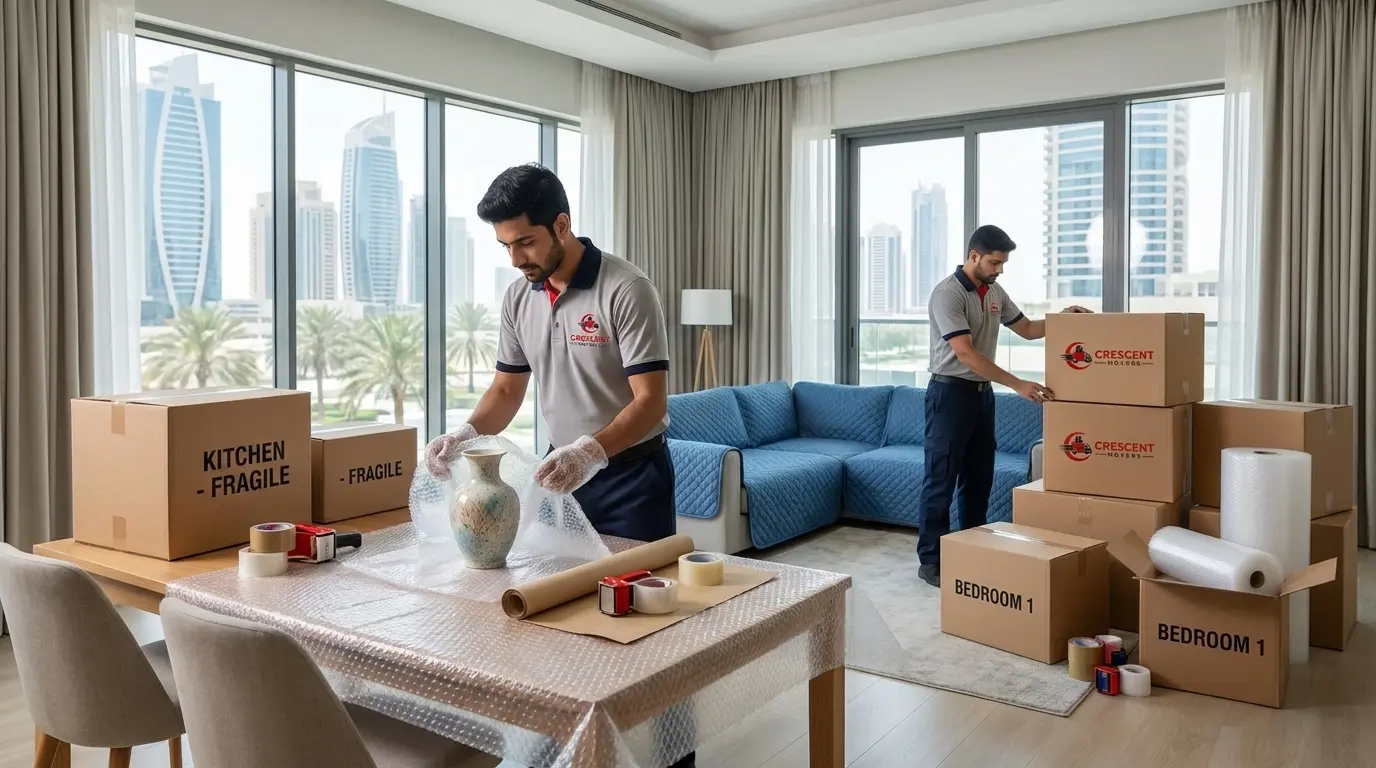
Complete Guide To Packing Your Home Before Relocation
You start packing for a move thinking it will be a simple matter of putting belongings into boxes. Then you open the first cupboard and realize how many different things need to be sorted, protected and organized.
A kitchen contains glassware, plates, appliances and everyday items. Bedrooms contain clothing and personal belongings. Living rooms may have electronics, decorations and furniture that require additional protection. On top of that, important documents and daily essentials need to remain accessible until the move is complete.
This is why packing home before moving requires more than simply filling boxes.
Good preparation helps you understand what needs to be packed, what should remain accessible, which items need additional protection and how everything will be organized when it reaches the new property.
For families, apartment residents and villa owners in Abu Dhabi, this can make the difference between a rushed packing process and a more controlled relocation.
This guide explains how to prepare your home, organize belongings, pack different rooms, protect fragile items and prepare furniture before moving day.
Why Proper Packing Matters Before Moving
Packing is one of the stages that can influence the rest of the relocation.
When belongings are poorly organized, it can become harder to load the vehicle efficiently, identify boxes at the destination or find important items after arrival.
Proper packing can help with several practical areas.
Protecting Belongings
Different belongings have different handling requirements.
Glassware, electronics, artwork, decorative pieces and other delicate items may need additional protection. Furniture can also require wrapping to reduce the risk of scratches or contact with walls and doorways.
The goal is to prepare each item according to its size, material and handling requirements.
Saving Time
Packing gradually gives you more control over the process.
Instead of trying to prepare the entire home in the final few days, you can work through rooms and categories step by step.
This also gives you time to identify items that need special preparation before moving day.
Better Organization
A consistent packing system makes it easier to know what is inside each box and where it belongs.
Labels such as the room name, contents and priority can provide useful information without requiring every box to be opened.
Reducing Moving Stress
Last-minute packing creates additional decisions when you are already dealing with moving arrangements.
Completing preparation earlier means fewer tasks need to be handled at the same time.
Easier Unpacking
The packing process should also consider what happens after arrival.
Boxes that are clearly labeled and grouped according to rooms can make it easier to organize the new home without opening everything at once.
Create A Packing Plan Before You Start
Before buying boxes or packing the first item, create a simple plan.
A good packing plan does not need to be complicated. It simply needs to help you understand what should happen first, what can wait and which belongings require additional attention.
Start Room By Room
Avoid moving from one room to another without a system.
Choose one area and work through it before moving to the next.
For example, you can begin with a bedroom, then move to the living room, kitchen, bathrooms and storage areas.
This reduces confusion and makes it easier to track what has already been packed.
Sort Items Before Packing
Packing is a good opportunity to review what you actually want to take to the new property.
Create simple categories such as:
- Keep
- Donate
- Dispose
You may also have belongings that need to be sold or stored separately.
There is little benefit in spending time packing items that you already know you do not want to keep.
Prepare Packing Materials
The right materials can make packing more organized.
Depending on your belongings, you may need:
- Boxes
- Packing tape
- Bubble wrap
- Labels
Fragile belongings may require additional protective material, while larger furniture needs a different preparation approach.
Prepare your materials before starting each room so you are not constantly stopping to find what you need.
How To Pack Different Areas Of Your Home
Different rooms require different packing approaches.
The most useful method is to consider how frequently each item is used, how fragile it is and how it will be handled during transportation.
Kitchen Items
The kitchen can contain a mixture of fragile and durable belongings.
Glassware
Wrap glasses and other delicate pieces individually where appropriate.
Avoid placing heavy objects directly on fragile items.
Plates
Stack plates carefully with suitable protection between them when necessary.
Make sure the box is stable and not overloaded.
Appliances
Small appliances that are rarely used can usually be prepared earlier.
Keep accessories and cables together so they are easier to identify when setting up the kitchen again.
Bedrooms
Bedrooms generally contain a large quantity of personal belongings.
Clothes
Pack seasonal clothing and rarely used items first.
Keep clothing needed for the final days of the move accessible.
Personal Items
Personal belongings should be grouped logically.
Important items should remain easy to identify rather than being placed randomly into boxes simply because space is available.
Living Room
Living rooms often combine electronics, decorations and furniture.
Electronics
Keep cables and accessories organized with the device they belong to.
Where possible, keep related components together so setup at the new property is easier.
Decorations
Decorative objects can be fragile and should be protected according to their material and shape.
Artwork, mirrors and other delicate pieces should receive additional attention during preparation.
Bathrooms
Bathrooms contain many daily-use items.
Essentials
Do not pack every bathroom item too early.
Keep the products required for everyday use until closer to moving day.
Daily-Use Items
Prepare a separate collection for the first day at the new home.
This prevents essential items from becoming buried underneath boxes that may not be opened immediately.
How To Pack Fragile Items Safely
Fragile belongings require more attention because they can be affected by movement, pressure and contact with other items during handling.
Glass Items
Glassware should be protected individually where appropriate.
Use suitable wrapping material and make sure there is enough protection around delicate surfaces.
Avoid leaving large empty spaces inside boxes where items can move unnecessarily.
Electronics
Electronics should be prepared carefully.
Keep cables, chargers and smaller accessories organized with the correct device.
If original packaging is available and suitable, it can also help keep certain items organized during transportation.
Artwork
Artwork, framed pictures and decorative wall pieces need protection from impacts and pressure.
Consider their size, frame construction and the surfaces that could be damaged during handling.
Decorative Pieces
Small decorative objects can vary significantly in shape and fragility.
Group similar items carefully and avoid placing heavier belongings on top of delicate pieces.
Wrapping Methods
The protective material should be appropriate for the item.
Wrap exposed surfaces carefully and provide additional protection to corners and vulnerable areas where needed.
Box Protection
Do not overload boxes containing fragile belongings.
A box should be stable enough to handle without excessive movement of the contents.
Labeling
Clear labeling helps everyone understand how a box should be handled and where it belongs.
A simple label such as:
provides more useful information than a box with no identificationa last-minute task, belongings are easier to organize, protect and identify after arrival. For households that need additional assistance with their preparation, professional packing support can be considered as part of the wider relocation process. .