
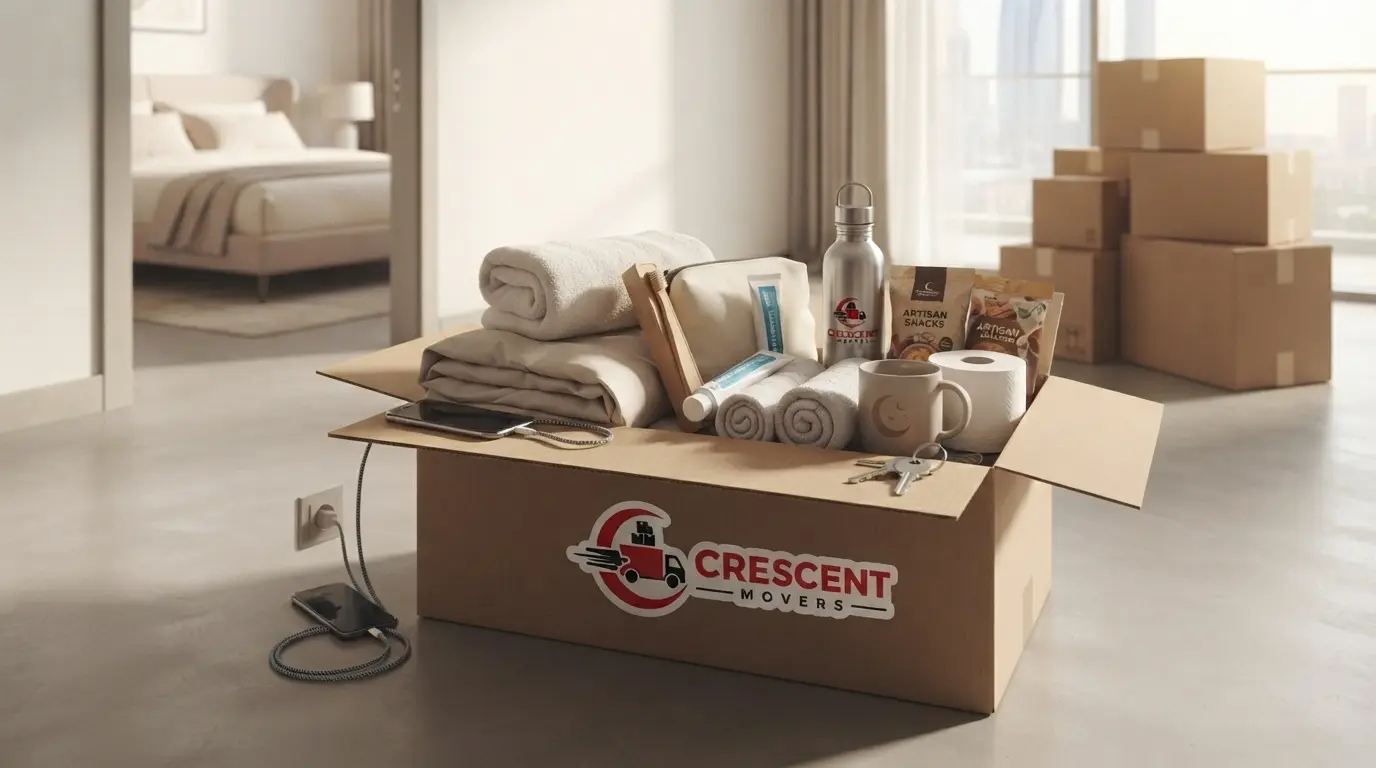
After a long moving day, the last thing you want is to open several boxes just to find your toothbrush, phone charger or a clean towel. You may have reached your new home, but most of your belongings could still be packed away, and setting up every room can take time.
A first-night box helps you avoid this problem. It is a separate box, bag or suitcase containing the things you will need during your first evening and the following morning. Instead of searching through packed cartons, you can access your daily essentials immediately.
The key is to pack practical items rather than trying to fit everything you own into one container. Toiletries, bedding, a change of clothes, essential medications and phone chargers are useful starting points. You can then adjust the contents to suit your household, travel arrangements and plans for the first 24 hours.
This guide explains what to include, what to keep with you rather than on the moving truck, and how to prepare your essentials so they are easy to find when you arrive.
What Is a First-Night Box?
A first-night box is a dedicated container holding the items you expect to need immediately after reaching your new home. It works like an overnight travel bag, except it contains essentials for the household as well as individual family members.
The purpose is simple: make your first evening comfortable without requiring you to unpack the entire home.
For example, you might need to shower, prepare a simple meal, charge your phone, change clothes and get ready for bed before you have unpacked your bedroom or kitchen.
Keeping these items together makes those tasks easier.
Your first-night box does not need to be large. A suitcase, a sturdy plastic container or a clearly labelled cardboard box can work well. The best option is one that is easy to carry, identify and access when you reach your destination.
1. Pack Toiletries and Personal Care Essentials
Personal care items are among the first things you are likely to need after arriving. Even if you plan to unpack quickly, it is helpful to have your bathroom essentials ready.
Consider including:
- Toothbrushes and toothpaste
- Hand soap
- Shampoo and body wash
- Deodorant
- Hairbrush or comb
- Towels and washcloths
- Toilet paper
- Personal hygiene products
- Moisturiser and other daily skincare items
Choose travel-sized products where possible to save space. If you are travelling with several family members, organise the items in separate toiletry bags so everyone can find what they need.
Keep liquids in sealed bags to reduce the risk of spills. Place them away from electronics, documents and clean clothing.
You should also consider whether your new bathroom will be ready to use immediately. If you expect to need a shower curtain or another basic item before unpacking the bathroom boxes, keep it accessible.
2. Keep Essential Medications and Health Items Accessible
Medications and important health supplies should not be buried in a carton that you may not open until later.
Keep any prescribed medications you need, along with the instructions and supplies associated with their normal use. If someone in your household relies on a particular medical item, make sure it remains accessible throughout the move.
A small personal health pouch may include:
- Regular medications in their original packaging
- Prescription information, where relevant
- Glasses or contact lenses and their supplies
- Basic first-aid items
- Any essential personal medical supplies
Follow the storage instructions for your medications, especially if they require temperature control. Do not place temperature-sensitive medication in a box that may sit in a hot vehicle.
If you are moving with children, older family members or anyone with specific medical needs, prepare their essential supplies separately so they are easy to locate.
The main rule is straightforward: anything you may urgently need should remain with you rather than being packed away with general household belongings.
3. Prepare Bedding and Comfortable Sleepwear
You may finish unloading late in the evening, leaving little energy for unpacking the bedroom. Having basic sleeping supplies ready can make your first night considerably easier.
Include:
- A clean bedsheet for each bed you plan to use
- Pillowcases and pillows
- Blankets appropriate for the weather
- Pyjamas or comfortable sleepwear
- A fresh change of clothes for the following day
- Slippers or comfortable indoor footwear
If your bed will not be assembled immediately, consider keeping an air mattress or another suitable temporary sleeping arrangement accessible.
For a family, separate the bedding by person or bedroom. This avoids the need to search through several bags when everyone is ready to sleep.
Think about the following morning as well. You may need clothes for work, school or an appointment before the rest of your wardrobe is unpacked.
Packing one complete outfit per person can save time and make the first morning more organised.
4. Keep Phones, Chargers and Important Electronics With You
Phones are useful for communication, navigation, coordinating deliveries and contacting building management. A discharged phone can make an already busy moving day more difficult.
Keep your essential electronics together in a small bag that stays accessible.
Useful items include:
- Mobile phones and their chargers
- A charged power bank
- Laptop and charger, if needed
- Charging cables for essential devices
- A suitable power strip, if required
Charge your devices before moving day and check that you have packed the correct cables.
If you work remotely or need to attend a meeting the following morning, keep your laptop, work accessories and any essential documents together rather than placing them in a general electronics carton.
Before using a power strip or electronic device in your new home, check that the outlet and electrical supply are suitable.
Keep valuable electronics secure during transport. They should not be left unattended in an unlocked vehicle or mixed into a box that may be difficult to locate.
5. Pack Simple Food, Drinks and Basic Kitchen Items
You may not feel like unpacking the entire kitchen after spending the day moving. Having a few basic food items available can help you manage the evening and following morning.
Consider packing:
- Drinking water
- Non-perishable snacks
- Tea or coffee, if you regularly drink them
- Mugs or reusable cups
- Plates and basic cutlery
- Napkins or paper towels
- A small kitchen towel
- A few easy breakfast items
Choose food that is suitable for the journey and does not require refrigeration unless you have an appropriate way to keep it cold.
If you expect to prepare a simple meal, include only the utensils and equipment you will realistically use. There is little benefit in carrying a large collection of kitchen items when one or two basics will do.
You can also plan to order food after arriving. The purpose of keeping a few supplies accessible is to give yourself options, not to recreate a fully functioning kitchen on the first night.
Before packing food, consider any dietary requirements and the needs of children or other family members.
6. Bring Basic Cleaning and Opening Supplies
Even a well-prepared home may need a little attention before you begin unpacking. You might want to wipe a surface, remove packaging or open a few essential cartons.
A small utility pouch can contain:
- Cleaning wipes or a suitable surface cleaner
- A few rubbish bags
- Paper towels or cleaning cloths
- Scissors
- A marker
- A small roll of tape
- A basic screwdriver, if appropriate
Keep sharp tools safely covered and separate from toiletries, food and items children might reach.
Do not pack unnecessary equipment simply because it might be useful. Focus on items that will help you manage the first evening and open essential packages safely.
For more detailed preparation advice, see our guide to packing your home before moving.