
How to Pack Bathroom Items Before Moving House
The bathroom may be one of the smaller rooms in a home, but it can contain many different types of items that need careful preparation before a move. Toiletries, bottles, medicines, glass containers, towels, electrical grooming devices and cleaning products all require different handling.
Packing everything into boxes without a plan can lead to leaking bottles, broken containers, misplaced essentials or products you no longer need taking up valuable space.
A better approach is to sort bathroom items first, separate what needs special care and pack each category according to its needs.
This guide explains how to pack bathroom items before moving house, including toiletries, liquids, medicines, fragile items, towels, bathroom appliances and everyday essentials.
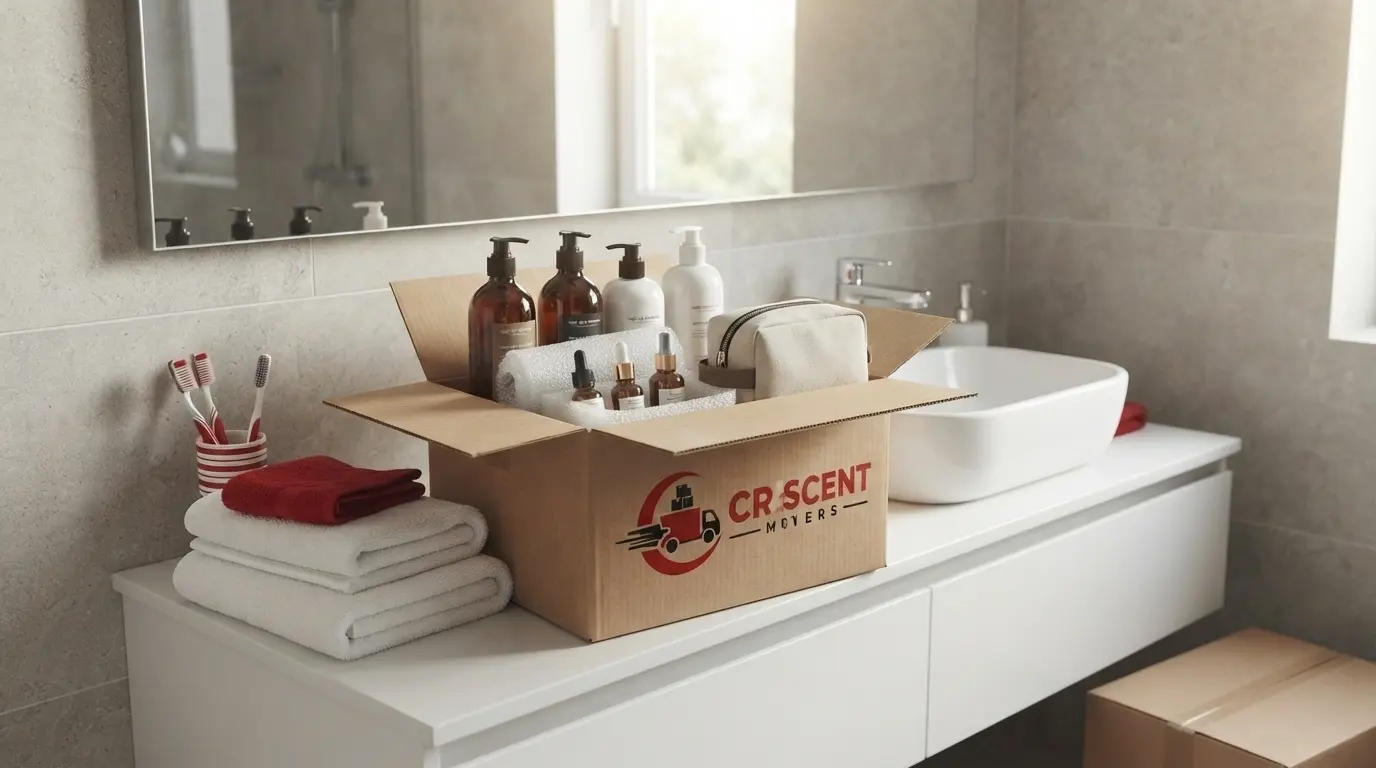
Why Bathroom Items Need Special Packing
Bathroom belongings are different from many other household items because they include a mixture of liquids, fragile containers, small personal items and products that may still be needed until the final day.
A shampoo bottle and a glass perfume bottle should not be treated in exactly the same way. Similarly, daily medicines should not be packed deep inside a moving box where they may be difficult to access.
Several bathroom items can create specific packing challenges:
- Liquid bottles can leak if their caps are loose or damaged.
- Glass containers can break if they are not properly protected.
- Small toiletries can become difficult to find when mixed together.
- Medicines may need to remain accessible during the move.
- Towels and bathroom linens need to be completely dry before packing.
- Electrical grooming devices can contain loose accessories and cables.
- Cleaning products may require separate handling from ordinary toiletries.
- Everyday bathroom essentials may still be needed on moving day.
The goal is to organize these categories before packing rather than putting everything into the nearest available box.
1. Sort Your Bathroom Before Packing
Start by removing items from bathroom cabinets, drawers, shelves and storage areas.
Work through one section at a time rather than emptying the entire bathroom without a plan. This makes it easier to see what you actually have and reduces the chance of forgetting items hidden at the back of cabinets.
Create separate groups for:
- Items you use regularly.
- Items you want to pack.
- Items you no longer need.
- Items that need special handling.
- Items that should remain accessible until moving day.
Check toiletries for products that are empty, nearly finished, expired or unlikely to be used again.
There is little benefit in transporting products that you already intended to replace. Reducing unnecessary items also gives you fewer bottles, containers and small objects to organize.
Review medicines separately
Medicine should be treated as its own category rather than being mixed with ordinary bathroom products.
Check expiry dates and keep necessary medicines accessible. If you have prescription medicines or products that require particular storage conditions, follow the relevant instructions rather than treating them like ordinary toiletries.
Keep important medicines in a clearly identified personal bag or container instead of placing them in a box that may be difficult to access during transportation.
Keep useful items together
Once you have finished sorting, group similar items together.
For example, you can keep toiletries together, hair-care products together, towels together and bathroom accessories together.
This makes packing easier and helps you unpack according to category instead of opening several boxes to find related items.
2. Prepare a Bathroom Essentials Bag
The bathroom is usually still needed while the rest of the house is being packed.
Instead of packing every bathroom item immediately, prepare a small essentials bag for the final preparation period and the first night at your new home.
Depending on your household, this may include:
- Toothbrush and toothpaste.
- Soap or hand wash.
- Shampoo and shower products.
- Deodorant.
- Basic skincare products.
- Daily medicines.
- Toilet paper.
- A small towel.
- Razor or other daily grooming items.
- Personal hygiene products.
- Contact lenses or glasses where applicable.
Keep the essentials bag separate from the main bathroom boxes.
Ideally, it should travel with you or remain easy to access rather than being buried underneath other belongings.
This approach means you do not have to reopen several boxes when you need something immediately after arriving.
Keep one working bathroom set until the end
Do not pack every bathroom item simply because the boxes are ready.
Leave enough basic supplies available for the remaining time in the old property. This can include hand soap, toilet paper, a towel and the toiletries you use every day.
Once the final cleaning is complete, these remaining items can be added to the essentials bag.
3. Pack Toiletries and Liquid Products Carefully
Liquid toiletries are one of the main bathroom-packing challenges because a loose cap or damaged container can cause a leak.
Common examples include:
- Shampoo.
- Conditioner.
- Body wash.
- Face wash.
- Mouthwash.
- Lotions.
- Liquid soaps.
- Skincare products.
- Hair products.
- Other bottled personal-care products.
Before packing each bottle, check that the container is intact and the cap closes securely.
Use an extra layer of protection
For bottles that could leak, consider placing suitable protective material over the opening before securing the cap.
After closing the bottle, place it inside a sealed bag or other suitable secondary container where appropriate.
This provides another layer of protection if the bottle leaks during transportation.
Keep liquid bottles upright
Where practical, arrange liquid bottles upright inside the box.
Use suitable packing paper or other protective material to prevent bottles from moving excessively.
Avoid packing liquids loosely alongside items that could be seriously damaged by moisture.
Do not overfill liquid boxes
A box full of bottles can become awkward to carry, particularly when the containers are made of glass or contain dense products.
Use suitably sized boxes and distribute the contents rather than creating one overloaded container.
Clearly label boxes containing bathroom liquids so they can be handled and positioned appropriately.
4. Protect Glass and Fragile Bathroom Items
Bathrooms often contain glass bottles, mirrors, ceramic accessories and other breakable objects.
Examples include:
- Perfume bottles.
- Glass skincare containers.
- Ceramic soap dispensers.
- Glass jars.
- Small mirrors.
- Decorative bathroom items.
- Glass shelves or accessories.
Wrap fragile items individually using suitable protective material.
Avoid allowing glass objects to touch each other directly inside the box.
Use padding around fragile items
Place appropriate cushioning around the items and fill empty spaces so that they cannot move freely during transportation.
Do not rely on the box itself to protect fragile contents. A box can reduce contact with other belongings, but it does not automatically prevent movement or impact.
For larger mirrors or framed glass items, use suitable protective packaging designed for the size and shape of the item.
Keep fragile items identifiable and avoid placing heavy objects on top of them.
Check corners and edges
Mirrors and other flat glass items can be particularly vulnerable around their corners.
Protect exposed edges and corners with appropriate material before placing the item into its container.
Make sure the item is supported rather than left loose inside a large box.
5. Pack Medicines and Personal-Care Items Separately
Medicines should remain easy to identify and access throughout the move.
Avoid mixing medicine with general toiletries simply because both are stored in the bathroom.
Create a separate, clearly identified bag or container for medicines and other essential personal-care items.
Keep this container somewhere accessible rather than placing it underneath heavier boxes.
Check storage requirements
Some medicines or personal-care products may have specific storage requirements.
Follow the instructions provided with the product and avoid improvising storage conditions during transportation.
If a medicine requires particular temperature or handling conditions, plan accordingly before moving day.
Keep important items with the right person
If a particular household member relies on a medicine or personal-care item, make sure that person knows where it is.
This is especially important when several people are packing and loading belongings at the same time.
The aim is simple: essential health-related items should not disappear into an unidentified bathroom box.
6. Pack Towels, Bath Mats and Bathroom Linens
Towels and bath mats are generally easier to pack than liquids or fragile items, but they still need to be prepared properly.
Make sure all towels, mats and other bathroom linens are completely dry before placing them into boxes or bags.
Damp fabric can develop unpleasant odors when enclosed.
Group linens together
Keep bath towels, hand towels, face towels and bath mats together where practical.
You can organize them by bathroom or household member if that makes unpacking easier.
Avoid mixing clean bathroom linens with dirty laundry or damp items.
Use towels as protective material
Clean towels can also provide useful cushioning for suitable bathroom belongings.
For example, they can help separate some items inside a box and reduce movement around appropriately protected containers.
However, towels should not replace proper protection for particularly fragile objects.
Keep at least the towels needed for the first night outside the main linen boxes.
7. Prepare Bathroom Appliances and Electrical Items
Bathrooms can contain several small electrical appliances, including hair dryers, hair straighteners, electric shavers, electric toothbrushes and grooming devices.
Before packing these items, make sure they are clean and completely dry.
Allow heated appliances to cool fully before placing them into any bag or box.
Keep accessories together
Remove loose attachments where appropriate and keep chargers, cables and accessories with the device they belong to.
Small accessories can easily disappear when mixed with other bathroom items.
Use small bags for cables and attachments, and label them clearly if necessary.
Protect electrical items
Use suitable packing material to prevent appliances from being scratched or damaged during transportation.
If the original packaging is still available and suitable, it can provide a useful way to keep the appliance and its accessories together.
Do not pack electrical devices while they are damp.