
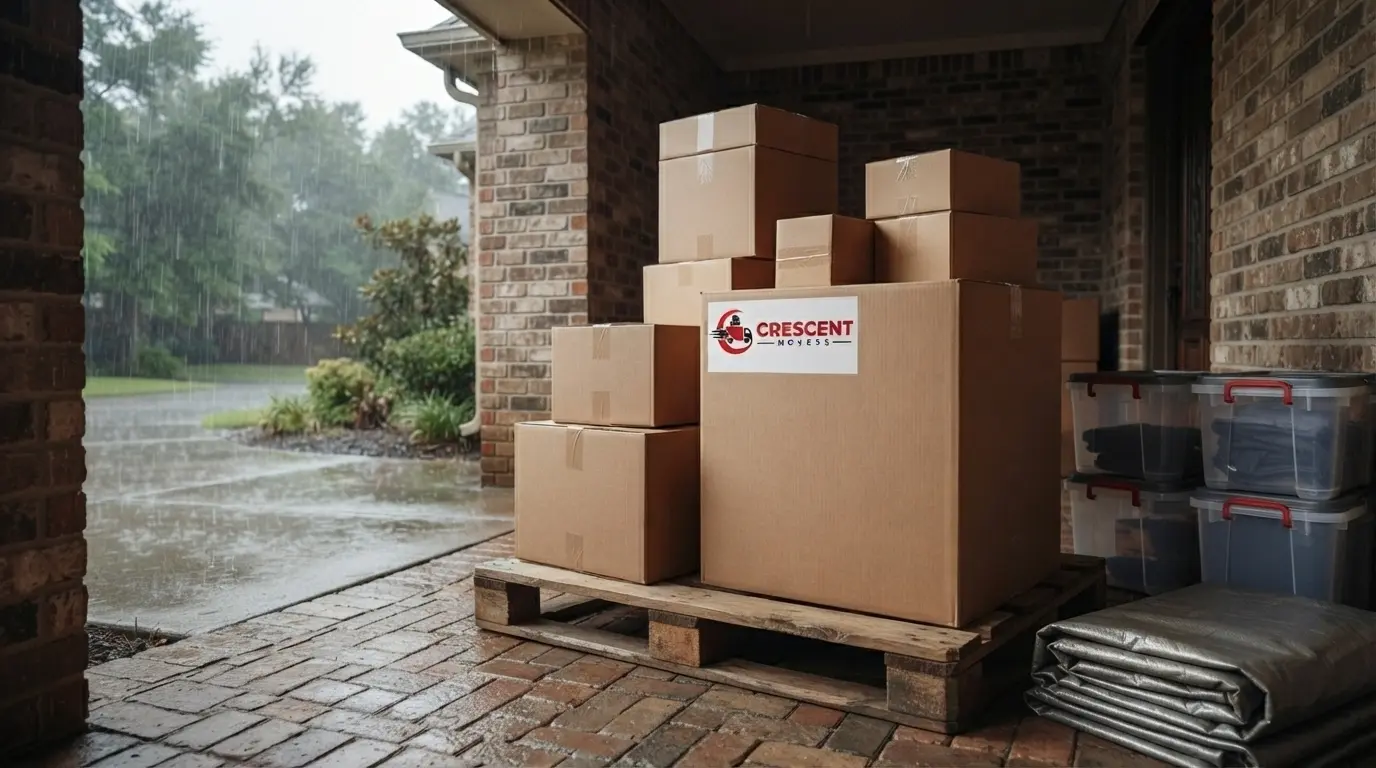
Moving boxes protected from moisture during a move
Moving Preparation Guide

How to Keep Moving Boxes Dry During a Move

Practical advice for protecting cardboard boxes and household belongings from rain, damp surfaces and moisture during loading, transport and unloading.

A moving box can look sturdy when it leaves your home but become difficult to handle after its cardboard absorbs moisture. Rain, a damp driveway, a wet loading area or a spill can soften the base and seams, putting the contents at risk. Even when the items inside do not get wet immediately, weakened packaging can make lifting and stacking less safe.

The best way to keep moving boxes dry is to start with sound, dry cartons, reinforce their bases, protect moisture-sensitive belongings separately and reduce the time boxes spend exposed during loading and unloading. You should also plan where boxes will wait so they are not placed on damp floors or pavement.

Whether you are moving a few rooms or an entire household, these steps can help you protect your belongings and avoid preventable moisture damage.

1. Why Keeping Moving Boxes Dry Matters

Cardboard is convenient for moving because it is lightweight, easy to label and available in different sizes. However, ordinary cardboard is not waterproof. When moisture reaches the paper layers, the box can lose stiffness, especially around the bottom, corners and taped seams.

Wet or weakened boxes can create several problems:

1

Weak box bottoms

The base may sag or tear when a box is lifted.

2

Damaged contents

Water can stain books, documents, clothing, photographs and other items.

3

Unstable stacks

Damp cartons may not support the weight of boxes placed above them.

4

Messy unloading and hidden dampness

Wet cardboard can tear or leave moisture on floors and other belongings. Items packed away before they are fully dry may retain moisture and develop an unpleasant smell.

The risk depends on the type of cardboard, the amount of moisture, how long the box is exposed and how heavily it is packed. A little dampness does not always mean the contents are ruined, but a box that has become soft or lost its shape should not be treated as safe for heavy lifting.

2. Choose Strong, Dry Boxes Before Packing

Moisture protection starts before moving day. Inspect your cartons before filling them rather than waiting until they are loaded.

Check the condition of each box

Choose boxes that are dry, clean and structurally sound. Avoid cartons with soft corners, crushed edges, water marks, torn flaps or a musty smell. Previously used boxes may be suitable if they remain firm and have not been exposed to moisture.

If a carton has been stored in a damp garage, shed or outdoor area, check its base and corners carefully. A box may look acceptable from the outside while its bottom layers have already softened.

Match the box to its contents

Do not fill a large carton with heavy books, kitchenware or other dense items just because there is room. Excessive weight places additional strain on the base and taped seams.

Use smaller boxes for heavy belongings and reserve larger cartons for lightweight items such as bedding or cushions. If a box will be carried through an area where moisture is possible, a manageable weight makes it easier to move quickly without dragging or dropping it.

Keep packed cartons in a dry holding area

After packing, store boxes indoors on a dry, stable surface. Keep them away from leaking pipes, wet cleaning areas, open doors exposed to rain and other sources of moisture.

For a broader preparation plan, read our guide to preparing your home for packing. It can help you organise packed belongings before the loading process begins.

3. Protect the Bottom and Seams of Each Box

The bottom of a moving box deserves particular attention because it carries the contents' weight and may come into contact with damp surfaces.

Reinforce the base with packing tape

Close the bottom flaps securely and apply suitable packing tape along the main seam. For heavier cartons, reinforce the base with additional tape across vulnerable joins. Make sure the tape adheres to clean, dry cardboard.

Tape can strengthen the box, but it does not make ordinary cardboard waterproof. Do not rely on tape alone to protect a carton from rain or standing water.

Keep boxes off the ground

Never leave cardboard cartons sitting directly on wet pavement, damp grass or a visibly wet loading area. Use a dry, stable platform or suitable trolley when available. At the destination, move boxes onto a dry indoor surface rather than leaving them outside while other belongings are unloaded.

If the floor itself is damp, place a suitable protective layer underneath the boxes. Make sure the surface remains stable and does not create a slipping or tipping hazard.

Protect exposed cardboard when needed

If boxes must pass through light rain or a damp outdoor route, an appropriate outer cover can reduce direct exposure. Large waterproof covers or plastic sheeting can be useful when applied securely.

Keep in mind that a loose sheet may shift in the wind, catch on corners or make cartons harder to grip. The cover should protect the box without obstructing safe lifting. For valuable or moisture-sensitive belongings, use an additional protective layer around the items themselves rather than relying only on the outside of the carton.

Practical reminder

Tape can reinforce seams, but it does not make an ordinary cardboard carton waterproof. Keep boxes away from water whenever possible.

4. Use Inner Protection for Moisture-Sensitive Belongings

An outer box is only one layer of protection. For belongings that could be damaged by moisture, add a suitable barrier between the item and the cardboard.

Protect documents, photographs and small electronics

Place important papers, photographs, cables and small electronic accessories in suitable sealed bags or waterproof containers before placing them inside a carton. Keep essential documents and high-value electronics separate from ordinary household items where practical.

For larger electronics, follow the manufacturer's packing recommendations and use appropriate protective packaging. Do not assume a cardboard box or a layer of ordinary plastic wrap makes an electronic device waterproof.

Protect clothing, bedding and soft furnishings

Clean, dry clothing, towels, sheets and cushions can be placed inside suitable bags before being packed. This provides another layer of protection if the outer carton becomes damp.

Make sure the contents are dry before sealing them. Wrapping damp textiles in plastic and leaving them closed for an extended period can trap moisture rather than solve the problem.

Avoid creating condensation problems

Plastic liners and waterproof covers can help prevent water from reaching belongings, but they need to be used sensibly. Do not seal wet items inside an airtight bag and assume they will stay in good condition.

If you use a liner inside a cardboard box, keep the contents dry before sealing and avoid leaving damp materials enclosed for long periods. Use protection appropriate to the item rather than wrapping every object in several unnecessary layers.

Need Help Preparing for Moving Day?

Explore our practical moving resources or get in touch with Crescent Movers to discuss your household moving requirements.

Contact Crescent Movers

5. Prepare a Dry Loading and Unloading Route

Boxes are often exposed to moisture while being carried between the home and the vehicle. A well-organised route can reduce that exposure.

Choose a sheltered staging area

If possible, use a covered entrance, garage, indoor corridor or another permitted sheltered space as a temporary staging area. Keep boxes inside until the vehicle is ready to receive them instead of moving everything outdoors in advance.

In apartment buildings, check which loading entrances and service areas can be used. Keep shared corridors clear and follow building access arrangements while staging cartons.

Reduce the distance boxes travel outdoors

Where permitted, position the vehicle as close as practical to the loading entrance. A shorter route means less time for boxes to be exposed to rain or splashes.

Do not block emergency exits, pedestrian routes or access for other residents to achieve a shorter path. Safety and building rules take priority.

Keep the loading process organised

Have the route cleared before carrying boxes outside. Keep dry towels and suitable covers available, and avoid creating a large outdoor pile of cartons waiting to be loaded.

A clear schedule can help with this process. Our moving-day timeline guide provides a useful reference for organising tasks around loading and unloading.

6. Protect Boxes During Transport

Even after loading, moisture protection still matters. A vehicle may encounter rain, road spray or damp conditions during the journey.

Check the cargo area before loading

Make sure the vehicle's cargo area is dry and suitable for the belongings being transported. Check for visible leaks, wet flooring or moisture around doors and access points. If you find a problem, address it before placing cardboard cartons inside.

Keep boxes away from any damp surface. If a suitable protective sheet is needed underneath them, make sure it is secure and does not cause the load to slide.

Use covers appropriately

A properly secured waterproof cover can provide an extra barrier where exposure is possible. Ensure it covers the cartons adequately without interfering with safe loading or blocking access to secure the load.

Do not assume that every vehicle or cargo compartment is completely waterproof. If weather conditions are poor, confirm how the belongings will be protected during the journey before loading begins.

Arrange boxes to reduce movement

Place heavier cartons at the bottom where appropriate, and avoid putting excessive weight on boxes that contain delicate or moisture-sensitive belongings. Keep the load stable so cartons do not slide into wet surfaces or damage each other.

Do not stack a softened or visibly damaged carton under heavier boxes. If a box becomes damp during transport, inspect it before deciding whether it can safely support additional weight.

7. Extra Precautions for Abu Dhabi Weather and Unexpected Rain

Abu Dhabi is known for hot conditions, but weather can vary and rain can still affect a moving day. Moisture can also come from cleaning, leaks, wet entryways or condensation, not only rainfall.

Use a few practical precautions:

  • Check the forecast: Review expected conditions before moving day and prepare suitable covers if rain is possible.
  • Keep cartons indoors until needed: Do not stage boxes outside for longer than necessary.
  • Protect exposed routes: Use a suitable waterproof cover where boxes must pass through an outdoor area.
  • Check apartment and villa access: Confirm that loading areas and covered entrances can be used without blocking shared access.
  • Inspect the vehicle: Make sure the cargo area is dry before placing cartons inside.
  • Respond to spills quickly: Move boxes away from the affected area and dry the surface before continuing.
Do not let urgency override safe handling. If heavy rain, standing water or slippery surfaces make the route unsafe, pause and reassess the loading plan rather than carrying boxes through hazardous conditions.

8. What to Do If a Moving Box Gets Wet

If a box becomes damp, act promptly but carefully. The next step depends on whether the carton is lightly damp, visibly softened or soaked through.

Step 1: Move it to a dry, stable area

If the box can be moved safely, place it on a dry surface away from further moisture. Avoid lifting it by a softened base or carrying it over people, furniture or fragile items.

Step 2: Check the box's strength

Inspect the bottom, corners and taped seams. If the cardboard is sagging, tearing or losing its shape, do not stack it or carry it as if it were undamaged. Support the contents from underneath or transfer them carefully into a dry, sturdy container.

Step 3: Inspect the contents

Open the box carefully and check for dampness. Remove moisture-sensitive items and dry them according to their material and care requirements. Paper, photographs, electronics and fabrics may need different handling.

If an electronic device has become wet, do not power it on while it may still contain moisture. Seek appropriate guidance for the device before using it.

Step 4: Let reusable packaging dry completely

A lightly damp box may be usable again only if it dries fully and retains its original strength and shape. A carton that is soaked, badly softened, mouldy or structurally damaged should be replaced rather than trusted for carrying heavy belongings.

9. Common Mistakes to Avoid

  • Leaving cartons outdoors while waiting for the vehicle: Keep them in a dry area until loading is ready.
  • Assuming packing tape makes cardboard waterproof: Tape reinforces seams but does not protect the entire carton from water.
  • Putting boxes on wet pavement: Use a dry, stable surface or suitable trolley.
  • Overpacking cartons: Excessive weight increases strain on the base, especially if the cardboard gets damp.
  • Sealing damp belongings inside plastic: Dry items first to avoid trapping moisture.
  • Ignoring a small leak in the cargo area: Check the vehicle before loading rather than discovering the issue after the journey.
  • Stacking softened boxes: A damaged carton may collapse under additional weight.
  • Rushing through unsafe weather: Pause if the route is slippery or conditions make handling dangerous.

10. Moving-Day Checklist: Keep Boxes Dry

Use this checklist before the first box leaves your home:

  • Check that every carton is dry, clean and structurally sound.
  • Reinforce box bottoms and seams with suitable packing tape.
  • Pack moisture-sensitive belongings in appropriate inner protection.
  • Store finished cartons in a dry indoor area.
  • Prepare a sheltered staging area where possible.
  • Keep boxes off wet floors, pavement and grass.
  • Check the cargo area for leaks or dampness before loading.
  • Keep suitable waterproof covers and dry towels available.
  • Reduce the time cartons spend exposed outdoors.
  • Inspect any box that becomes damp before lifting or stacking it.
  • Replace cartons that have lost their strength.
  • Unload into a dry area and inspect moisture-sensitive contents.

Conclusion

Keeping moving boxes dry is about more than covering cardboard with plastic. Strong cartons, reinforced bases, dry storage, suitable inner protection and an organised loading route all help reduce the chance of moisture damage.

Check the weather, prepare a sheltered route and inspect the vehicle before loading. If a carton becomes wet, assess its strength and protect the contents rather than assuming it is still safe to carry.

For help planning the handling and transport of your household belongings, you can contact Crescent Movers to discuss your moving requirements.

11. Frequently Asked Questions

1. What is the best way to keep moving boxes dry?

Use dry, sturdy cartons, reinforce their bases, keep them indoors until loading, and protect them with suitable waterproof covers when exposure to moisture is possible.

2. Does packing tape make cardboard boxes waterproof?

No. Packing tape helps secure flaps and reinforce seams, but ordinary cardboard can still absorb water through exposed surfaces. Use additional protection when moisture is a risk.

3. Should I wrap moving boxes in plastic?

Plastic wrap or a suitable waterproof cover can reduce exposure to rain and splashes. Make sure the covering is secure and does not make the box unsafe to grip or lift.

4. How can I protect boxes from a wet floor?

Keep cartons on a dry, stable surface, platform or suitable trolley. Avoid wet pavement, grass and damp loading areas, and move boxes away from spills promptly.

5. What should I do if the bottom of a moving box gets wet?

Stop and check its strength before lifting it. If the base has softened or started to tear, support the contents from underneath or transfer them carefully to a dry, sturdy container.

6. Are plastic storage bins better than cardboard boxes in wet weather?

Plastic bins with secure, suitable lids can offer better resistance to surface moisture than ordinary cardboard. However, they must be suitable for the items, kept stable and not assumed to be fully waterproof unless specified.

7. How do I protect important documents during a move?

Place documents in a suitable waterproof pouch or container before putting them in a box. Keep them dry and separate from items that may leak or become damp.

8. Can I reuse a moving box after it gets wet?

Only consider reusing it if it dries completely and remains firm, clean and structurally sound. Replace any carton that is soaked, softened, mouldy or damaged.