
Will Your Furniture Fit Through the Door, Hallway or Lift Before Moving Day?
Check furniture dimensions, doorway clearance and the route before moving day to identify possible access problems.
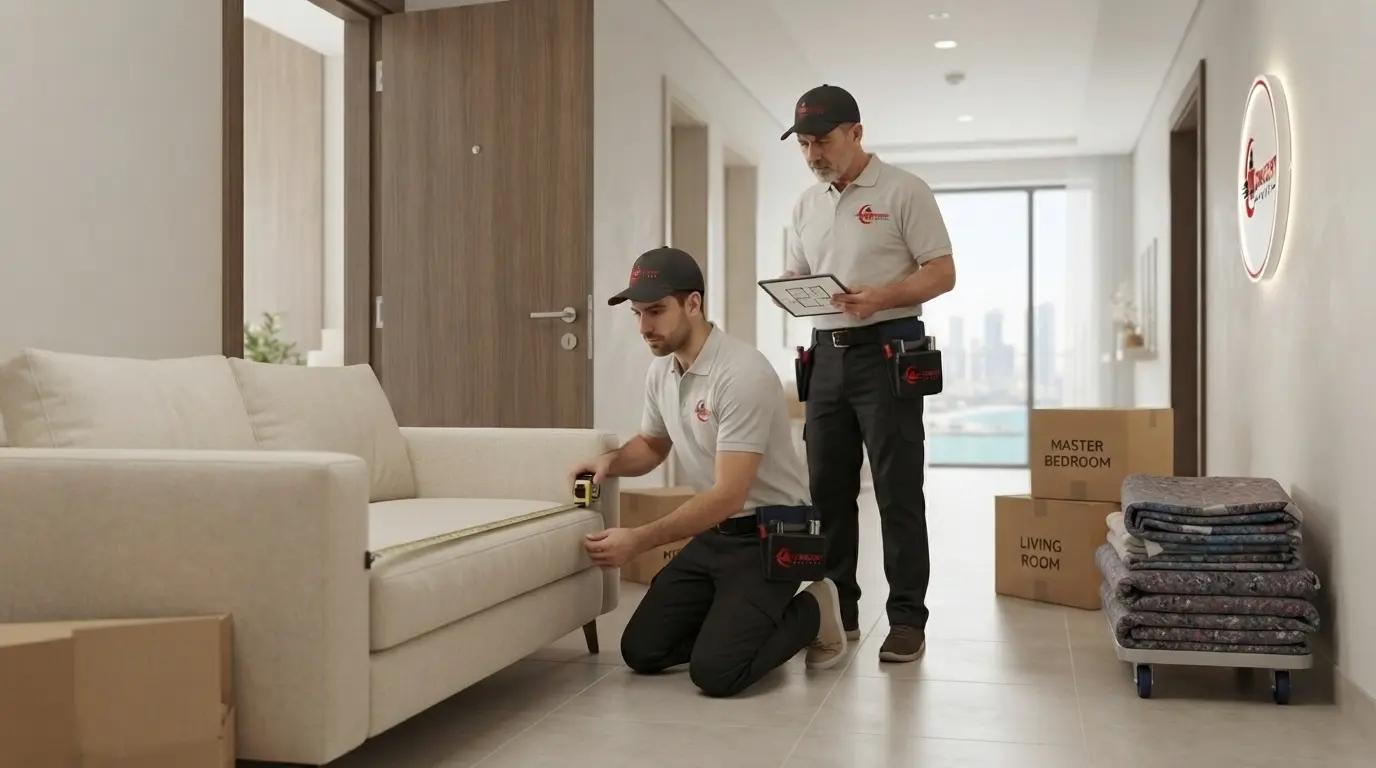
A sofa may fit perfectly in your new living room, but can it pass through the entrance, turn through the hallway and fit inside the lift? A wardrobe may have enough space in the bedroom, yet its height or depth could make getting it through the bedroom doorway difficult.
These are problems worth checking before moving day, when you still have time to take measurements, review the route and consider practical alternatives.
The key is to assess both the furniture and the complete route it must travel. Measuring only the destination room or the main entrance is not enough. Doorways, hallway corners, stair landings, lift doors and fixed obstructions can all affect whether a large item can be moved safely. For help with the handling of large household items, see our furniture moving service information.
This guide explains how to measure furniture and access points, identify potential obstacles and prepare for moving bulky belongings in Abu Dhabi.
1. Why Measuring the Room Is Not Enough
Room dimensions tell you whether furniture is likely to fit in a particular space. They do not tell you whether it can reach that space.
For example, a long sofa might fit against your living-room wall but be difficult to rotate around a narrow hallway corner. A tall wardrobe might clear the apartment entrance but encounter a low ceiling or restricted lift opening.
Think of the route as a series of checkpoints:
- The current room and exit doorway.
- The internal hallway and any tight turns.
- The building entrance and shared corridors.
- The lift, stairs or landings, where applicable.
- The entrance to the new property.
- The final room and the intended furniture position.
Check every restricted point along the route, not just the easiest one. If an item must pass through two buildings, assess the access conditions at both addresses.
2. Measure Furniture at Its Widest Points
Start by recording the dimensions of each large item you plan to move. Use a tape measure and write the measurements down instead of relying on estimates or memory.
For most furniture, record:
- Width: The measurement across the item at its widest point.
- Height: The measurement from the bottom to the highest fixed point.
- Depth: The measurement from the front to the back.
Include protruding handles, fixed arms, decorative edges and other parts that could catch on a doorway or wall. For a sofa, measure the arms and back as well as the overall length. For a wardrobe, include any projecting trim or fixed fittings.
Check whether parts can be removed
Some furniture becomes easier to handle when appropriate components are removed. Depending on the design, this may include sofa legs, table legs, detachable headboards or removable shelves.
Check the manufacturer's instructions before dismantling anything. Do not assume that a component is designed to come off simply because it has visible screws or joints.
Record the dimensions of the furniture in its assembled condition and, where appropriate, its reduced dimensions after safe disassembly. Keep screws and fittings together in a labelled bag.
3. Measure the Actual Doorway Clearance
A door frame's overall dimensions may not represent the space available for carrying furniture through it. What matters is the usable opening when the door is open in the position that will be used during the move.
Measure the clear width and height of the opening. Check for door handles, hinges, closers, raised thresholds and trim that may reduce clearance.
Repeat this process for every doorway along the route, including internal bedroom doors. A large entrance does not help if the furniture cannot pass through the smaller doorway at the destination.
If a door might need to be removed to provide more space, obtain permission from the property owner or building management where necessary and use an appropriate person to handle the work. Never force furniture through an opening that appears too tight.
4. Check Hallways and Tight Corners
Hallway turns can be more challenging than straight doorways because furniture may need to rotate as it moves.
Measure the narrowest usable hallway width and examine each turn. Look for walls that project into the route, columns, handrails, nearby door swings and other fixed obstacles. Also check the available space immediately before and after the corner.
A long sofa might pass through a doorway when carried at an angle but still fail to turn into the next corridor. Similarly, a tall cabinet might clear a hallway yet have insufficient overhead clearance when tilted.
Photographs can help you review a difficult route. Take pictures from both directions and note the measurements of the narrowest points. If a corner looks particularly restricted, have the dimensions reviewed before moving day rather than relying on trial and error.
5. Measure Lifts, Staircases and Landings
If you are moving into or out of an apartment building, check the lift and the route leading to it.
Lift measurements
Record the following:
- Lift-door opening width and height.
- Interior lift width, depth and height.
- Position of handrails and other fixed fittings.
- Available approach space outside the lift.
- Clearance on the route between the lift and the apartment door.
Do not assume that an item will fit simply because its length is less than the lift's depth. The shape of the furniture and the space available to turn or tilt it can affect the result.
Ask building management whether a service lift is available, whether it must be reserved and whether any restrictions apply to moving large furniture.
Staircases and landings
If stairs may be needed, measure their clear width, the size of each landing and the overhead clearance at turns. Banisters, low ceilings and nearby doors can restrict the space available to manoeuvre a bulky item.
Do not attempt a difficult lift or staircase manoeuvre just because the measurements appear close enough. Heavy furniture can be awkward to control, particularly on stairs. Arrange a suitable handling assessment if the route is uncertain.
6. Check the Route at Both Properties
A successful collection does not guarantee a successful delivery. The furniture needs to pass through the access route at the current property and at the destination.
Use this table to organise the information:
| Checkpoint | What to measure or confirm |
|---|---|
| Current room | Furniture dimensions and available exit space |
| Internal doorway | Clear width, height and threshold |
| Hallway | Narrowest width and turning space |
| Building entrance | Usable opening and nearby obstacles |
| Lift | Door opening and internal dimensions |
| Staircase | Width, landing dimensions and headroom |
| Destination entrance | Clear opening and access restrictions |
| Final room | Doorway clearance and intended placement area |
Record the measurements in the same units and identify the exact location of each restriction. If the two properties have different access conditions, keep their notes separate.
If you are preparing a wider moving checklist, our guide to preparing furniture before moving provides related advice on getting household items ready for relocation.
7. What Should You Do If Furniture May Not Fit?
Discovering a potential problem early gives you time to investigate options without rushing.
Check the measurements again. Confirm that you measured the usable opening rather than the outside of the door frame. Recheck the furniture's widest points and the space around any tight turns.
Look for a suitable alternative route. Another entrance or a different staircase may offer more clearance, but check building rules and the route's safety before relying on it.
Consider safe disassembly. Some items can be reduced in size by removing designed-to-detach parts. Follow manufacturer instructions and keep all fittings organised.
Share measurements and photographs. Give the moving team clear dimensions and pictures of the furniture, doorways, turns and lift. This makes it easier to identify areas that need closer assessment.
Avoid improvised lifting. Do not force an item through a tight opening, drag it across unsuitable surfaces or attempt an unsafe tilt. If there is doubt about the route or handling method, seek an appropriate assessment before proceeding.
Measurements help identify potential problems, but they cannot guarantee that every piece will fit. The furniture's shape, weight, handling orientation and available manoeuvring space also matter.
8. Abu Dhabi Apartment and Villa Access Considerations
In Abu Dhabi, the access arrangements at your particular building or villa should form part of your preparation.
Apartment buildings
Confirm which entrance and lift may be used for the move. Ask building management about reservations, loading areas, approved moving hours and any requirements for protecting shared spaces. A lift may be physically large enough for an item but unavailable at your intended time.
Measure the route from the loading area to the apartment, including lobby doors, corridors and the unit entrance. If security or access procedures apply, arrange them in advance.
For more information about preparing for a flat relocation, see our apartment moving guide.
Villas
Villas may have different access challenges, including entrance gates, narrow internal corridors, staircases and limited turning space near rooms. Check the route from the vehicle's loading position to the intended room rather than measuring only the main entrance.
If large furniture must pass through a side entrance or a staircase, measure those areas separately. Keep paths clear and avoid assuming that a second entrance will provide better clearance without checking it.
For either property type, use actual measurements and confirmed building arrangements rather than relying on assumptions about what should fit.
9. Furniture Measurement Checklist Before Moving Day
Use this checklist to make sure the important details have been reviewed.
Furniture
- Measure the width, height and depth of large items.
- Check handles, arms, legs and other protruding parts.
- Identify components designed for safe removal.
- Record any items that may need special handling.
Access route
- Measure each doorway's usable opening.
- Check hallway widths and tight turns.
- Measure lift doors and interior dimensions.
- Check staircases, landings and overhead clearance.
- Review the route at both properties.
- Photograph restricted areas and record measurements.
Building arrangements
- Confirm lift reservations and moving procedures.
- Check entrance and loading-area access.
- Ask about any relevant building restrictions.
- Share potential access problems before moving day.
Complete these checks before the moving date wherever possible. If any measurement is uncertain, flag it rather than treating the item as guaranteed to fit.
Conclusion
Knowing whether furniture will fit through a doorway, hallway or lift starts with measuring the item and the entire route it must travel. Pay particular attention to clear doorway openings, tight corners, stair landings, lift dimensions and the final room entrance.
Review access at both properties, confirm building arrangements and investigate potential restrictions before moving day. If the measurements are close or the route is difficult, seek an appropriate assessment instead of relying on guesswork.
If you need help planning the handling of bulky furniture, you can contact Crescent Movers to discuss your move and share any access concerns in advance.
Frequently Asked Questions
How do I know if my sofa will fit through a doorway?
Measure the sofa's width, height and depth, then measure the doorway's clear opening. Also check the space before and after the door, because the sofa may need to tilt or turn.
Should I measure furniture before moving day?
Yes. Measuring in advance helps identify possible access problems while there is still time to review the route, check removable parts or discuss alternatives.
Is measuring the doorway enough?
No. You should also check hallways, corners, staircases, landings, lift doors and the final room entrance. A piece can clear one opening but become stuck at another point.
How do I measure a lift for furniture?
Measure the lift-door opening and the lift's internal width, depth and height. Check the space outside the lift and the route to the destination as well.
What if my wardrobe or sofa does not fit?
Recheck your measurements and investigate whether a suitable alternative route or safe disassembly is possible. If the route remains uncertain, have it assessed before attempting to move the item.
Should I remove furniture legs before moving?
Only if the furniture is designed for safe disassembly and the manufacturer's instructions permit it. Keep the fittings together and avoid forcing parts apart.
What should apartment residents in Abu Dhabi check before moving large furniture?
Confirm the usable access route, lift dimensions, any reservation requirements and the building's moving procedures with management. Check the complete route rather than relying on the lift dimensions alone.
Can measurements guarantee that furniture will fit?
No. Measurements help identify likely restrictions, but furniture shape, turning space, handling orientation and obstacles can affect whether an item can pass safely.
Need Help Planning Your Move?
Visit Crescent Movers to learn more about the company, or get in touch to discuss your relocation requirements and any furniture access concerns.
Contact Crescent Movers