
How to Pack Books Without Making Moving Boxes Too Heavy

Books may seem easy to pack because they are compact and can be stacked neatly. However, a box that looks only half full can become surprisingly heavy once it contains hardcovers, textbooks, albums or a collection of novels.

The challenge is to protect your books without creating boxes that are difficult to lift, carry through hallways or move up and down stairs. Overfilled boxes can also put extra pressure on their bottoms, making them harder to handle safely.

A better approach is to sort your collection before packing, choose appropriately sized containers, distribute the weight across several boxes and organize the contents so that unpacking is straightforward.

This guide explains how to pack books without making moving boxes too heavy, including how to choose boxes, arrange different types of books, protect valuable editions and prepare everything for transportation.
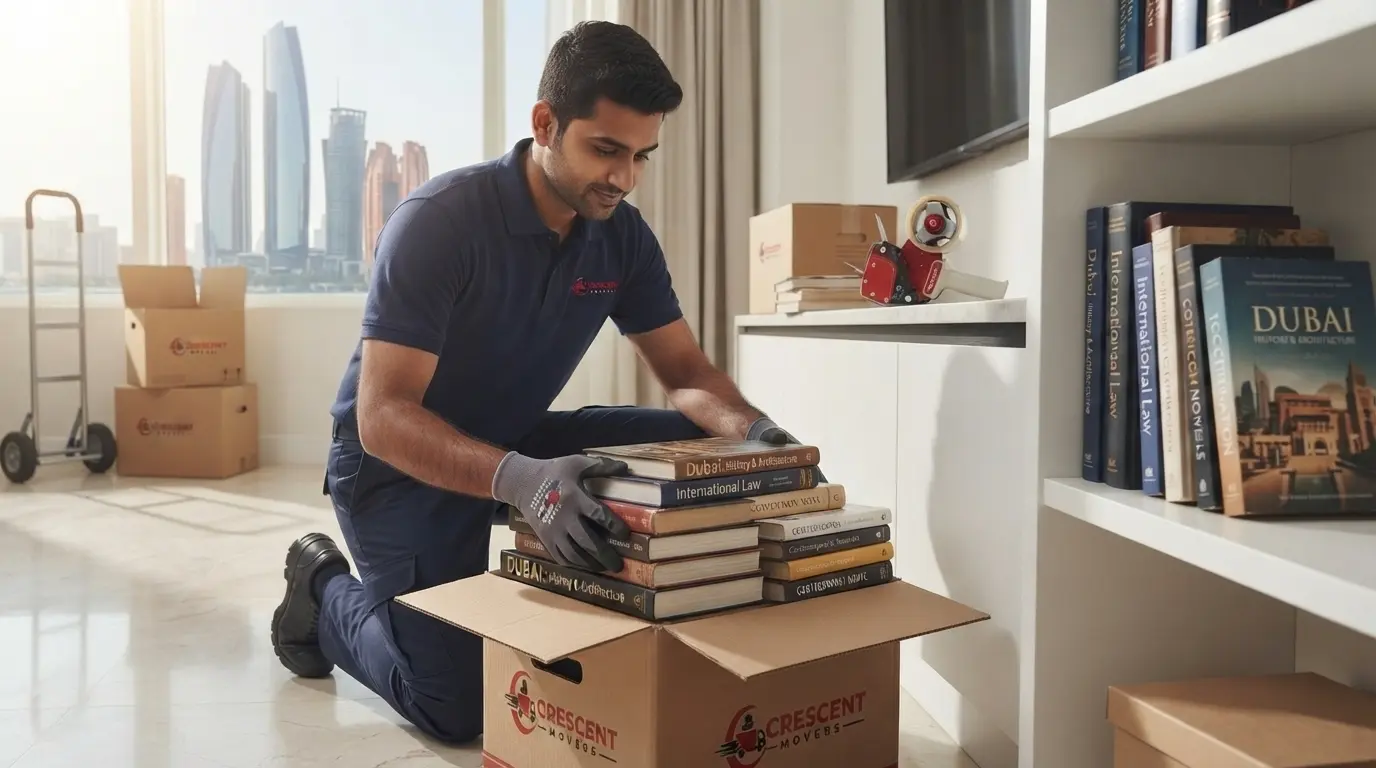
Books being organized for packing into manageable moving boxes

Why Books Can Make Moving Boxes Too Heavy

Books are dense compared with many everyday household belongings. A small stack of hardcovers or textbooks can add considerable weight even when it occupies relatively little space.

This makes books different from lightweight items such as cushions, blankets and clothing. Filling a large box with books simply because there is room available can make the container awkward to lift.

Several factors affect the final weight of a book box:

  • Book type: Hardcovers, textbooks and large reference books can be particularly heavy.
  • Box size: Large containers encourage people to add more books than they can comfortably carry.
  • Packing density: Closely packed books leave little room for the weight to be distributed differently.
  • Collection size: Packing an entire shelf into one box can result in an unnecessarily heavy load.
  • Handling conditions: Stairs, narrow hallways and longer carrying distances can make heavy boxes more difficult to manage.

The goal is not to fit every book into the fewest possible boxes. It is to create secure, manageable containers that protect the books and make handling easier.

1. Sort Your Books Before Packing

Before collecting boxes, review the books you intend to take with you.

Moving is a useful opportunity to identify books you no longer need. Carrying unwanted books takes up space and adds weight that could be avoided.

Create separate groups for:

  • Books you want to keep.
  • Books you plan to donate.
  • Books you may be able to sell.
  • Damaged or unwanted books that need another decision.
  • Valuable or sentimental books that require extra care.

Consider whether you still need old textbooks, duplicate editions, outdated reference books or titles you are unlikely to read again.

You do not have to reduce your collection if the books are important to you. The purpose is to decide what deserves space in the move before beginning the packing process.

For additional guidance, see our guide on declutter your home before moving.

Separate books by size and type

Once you have selected the books to keep, group them according to their approximate size and handling requirements.

For example, you might create separate groups for paperbacks, hardcovers, large-format books, textbooks and photo albums.

This makes it easier to distribute weight and choose a suitable arrangement for each box.

Keep rare, signed or sentimental editions separate so you can give them the attention they need rather than mixing them into a general collection.

2. Choose Small, Sturdy Boxes

One of the most effective ways to prevent book boxes from becoming too heavy is to use smaller containers for dense items.

A large box may appear convenient because it holds more books, but filling it completely can make it difficult to lift. Smaller boxes help limit how much weight accumulates in one place.

Choose containers that have:

  • A strong, undamaged base.
  • Sturdy sides that can support the contents.
  • Secure flaps that close properly.
  • Enough space for the books and suitable protective material.
  • A size that remains manageable when filled.

Inspect reused boxes carefully before using them. Avoid containers with damp patches, torn corners, weakened bottoms or damaged seams.

Reinforce the bottom

Before adding books, assemble the box correctly and secure its bottom flaps with suitable packing tape.

Check that the base feels secure and that the box does not show signs of damage. Reinforcement is particularly important when the contents are dense.

Do not assume that a large box becomes suitable for heavy books simply because its bottom has been taped. Box size and overall condition still matter.

Do not rely on appearance alone

A box can look small and still become heavy when filled with books.

Add books gradually and check the weight as you work. If the container becomes difficult to handle comfortably, divide the contents between additional boxes instead of trying to fit everything into one.

3. Distribute Books Across Multiple Boxes

When packing a large collection, distribute books across several manageable boxes instead of concentrating them in one or two containers.

Start with a small selection of books and add more gradually. This gives you an opportunity to assess the weight before the box is full.

A practical method is to:

  1. Prepare several sturdy boxes.
  2. Separate books into groups of similar size or type.
  3. Place a portion of each group into a suitable box.
  4. Check the weight before adding more books.
  5. Move some books into another container if the box becomes difficult to handle.
  6. Keep a little space for suitable packing material where necessary.

There is no single box weight that is comfortable or safe for every person. Physical ability, box design, carrying distance and handling conditions all affect what is manageable.

Choose a weight that you can handle safely, and ask for assistance or use suitable handling equipment when needed. Never force yourself to lift a box that feels too heavy.

Avoid packing by shelf alone

Packing books shelf by shelf can make unpacking easier, but it should not take priority over manageable weight.

If one shelf contains many large hardcovers, divide those books between multiple boxes. Label the boxes with the original shelf or collection information so you can still reconstruct the arrangement at your new home.

This preserves organization without concentrating too much weight in one container.

4. Pack Hardcover and Paperback Books Appropriately

Different book formats may need slightly different arrangements.

The main priorities are to support the books, avoid excessive pressure on their covers and bindings, and prevent movement inside the box.

Packing hardcover books

Hardcover books are often heavier and may have rigid covers.

Arrange books of similar sizes together where practical. Avoid forcing books into a tight space or pressing them so firmly against one another that removing them becomes difficult.

Depending on the book's size and condition, it may be appropriate to place it upright like a book on a shelf or flat with support beneath it.

Do not place heavy objects on top of exposed covers, delicate jackets or protruding book edges.

Packing paperback books

Paperbacks are generally more flexible than hardcovers, but their covers and pages can still bend or crease under pressure.

Group similar-sized paperbacks together and arrange them neatly. Avoid packing them so tightly that the covers curl or the books become difficult to remove.

For books with delicate covers, keep them away from sharp corners, loose fittings and other objects that could cause damage.

Keep large-format books separate

Oversized books, photo albums, art books and other large-format publications may be awkward to arrange upright.

Place these books flat when appropriate, supporting them evenly and avoiding an excessively tall stack. Keep particularly large or delicate items separate from smaller books if combining them would create uneven pressure.

Always consider the condition and construction of the individual book rather than applying one packing arrangement to every format.

5. Decide Whether to Pack Books Upright or Flat

Book orientation affects how books fit inside a box and how their covers and bindings are supported.

Many ordinary books can be arranged upright, similar to their position on a bookshelf, provided they are supported and not packed too tightly. Some books are better placed flat, particularly oversized or unusually shaped volumes.

When upright packing is suitable

Upright packing can work well for books of similar height and depth.

Arrange them so they stand securely without leaning excessively. Avoid leaving so much empty space that the books can fall over and move during transportation.

At the same time, do not force extra books into a box just to eliminate gaps.

When flat packing is suitable

Flat packing can be useful for large-format books, photo albums and books that are awkward to position upright.

Keep the stack reasonably low and stable. Avoid placing a heavy pile on delicate covers or creating uneven pressure across the books beneath it.

Avoid unsupported gaps

If there is space around the books, use suitable lightweight packing material to limit movement.

The aim is to prevent books from sliding around during transportation without applying excessive pressure to their covers or bindings.

6. Protect Valuable and Delicate Books

Not every book needs individual wrapping, but some collections deserve additional protection.

Older books, signed editions, sentimental gifts, rare publications and books with delicate covers may be more vulnerable to rubbing, bending or moisture.

Use suitable protective material

For books that need extra care, use clean, appropriate protective material between them or around individual volumes.

Acid-free tissue may be appropriate for certain valuable or delicate books, particularly when long-term preservation is a concern. Check the book's material and preservation requirements before choosing wrapping products.

Avoid wrapping books in materials that could transfer ink, moisture or residue onto their covers.

Keep books dry

Paper and bindings can be damaged by water or prolonged damp conditions.

Make sure boxes are dry before packing, and avoid placing book boxes directly on wet surfaces. Protect them from rain and other sources of moisture during loading and unloading.

If you use a plastic container, consider the conditions in which it will be transported and stored. Make sure the books are dry before sealing them inside.

Give special editions their own space

If a book is particularly valuable or irreplaceable, consider packing it separately in a suitable protective container.

Keep it identifiable and avoid placing heavy items on top of it. For books with special conservation requirements, follow advice appropriate to the specific materials and condition.

7. Use Suitcases and Other Suitable Containers

Moving boxes are not the only option for transporting books.

A sturdy suitcase or rolling case may be useful for a small collection, particularly if it has a strong base and can be moved without excessive effort.

However, wheels do not eliminate the need to control the total weight. A suitcase can still become difficult to lift into a vehicle, carry over steps or move across uneven surfaces.

Before using a suitcase:

  • Check that its base and handles are in good condition.
  • Distribute books evenly.
  • Avoid overfilling it.
  • Protect the books from contact with hard edges or loose objects.
  • Keep the weight manageable for lifting and loading.

Avoid using a container that is too large or structurally unsuitable for dense books.

If you are using a wheeled container, check that it can move safely along the route between the room and the loading area.

8. Fill Empty Spaces and Secure Each Box

Once the books are arranged, check whether they can move around inside the container.

Too much movement can cause books to slide, rub against one another or become disorganized during transportation.

Use suitable packing paper or other clean, lightweight protective material to fill gaps where needed.

The material should stabilize the contents without putting excessive pressure on the books.

Before sealing the box:

  • Check that the books are supported.
  • Make sure no book is sticking out above the box in a way that prevents secure closure.
  • Fill significant gaps that allow the books to shift.
  • Confirm that the flaps close without being forced.
  • Tape the box securely.

Do not keep adding books simply to use every available space. If the box becomes too heavy or crowded, move some of the books into another container.

A securely closed, manageable box is more useful than a completely filled box that is difficult to carry.

9. Label and Organize Book Boxes

Clear labeling makes it easier to locate books after the move and reduces the need to open several boxes to find one title or collection.

Use a permanent marker to identify the contents and the destination room.

Useful labels might include:

  • Study — Reference Books
  • Bedroom — Novels
  • Living Room — General Reading
  • Study — Textbooks
  • Personal Collection — Handle Carefully

You can also number boxes and keep a simple list of the collections packed in each one.

Keep related books together

Where practical, pack books from the same shelf, subject or household member together.

If a collection is too large for one box, use consecutive box numbers or a clear label to show that the collection continues in another container.

This helps preserve the original organization without requiring you to place every book into the same box.

Make the weight easy to recognize

If a box contains dense books, make its contents clear on the label.

Avoid stacking heavy book boxes on top of containers that may crush easily. Keep the boxes stable and positioned so they can be accessed without moving other items unnecessarily.

10. Common Book-Packing Mistakes to Avoid

Using oversized boxes for heavy books

Better approach: Choose sturdy, smaller containers and distribute the books across multiple boxes.

Filling a box until it is difficult to lift

Better approach: Check the weight as you pack and stop adding books when the box becomes difficult to handle safely.

Mixing very different book sizes without a plan

Better approach: Group books by size and format where practical, and give oversized books suitable support.

Leaving books loose inside the box

Better approach: Use suitable packing material to limit unnecessary movement.

Packing valuable books with no additional protection

Better approach: Identify delicate or irreplaceable books in advance and choose protective materials suited to their condition.

Forgetting to label the contents

Better approach: Write the destination room and a clear description of the books on each box.

Stacking heavy boxes carelessly

Better approach: Keep boxes stable and avoid placing heavy containers on top of boxes that could collapse or be damaged.

Leaving the entire collection until the last minute

Better approach: Sort and pack books in stages so you have enough time to organize them and check each box before moving day.

Final Book-Packing Checklist

Use this checklist before moving your packed books.

TaskWhat to check
Sort the collectionSeparate books to keep from those you no longer need.
Group booksOrganize by size, format, subject or shelf where useful.
Choose boxesUse sturdy containers suitable for dense contents.
Reinforce the baseCheck that the box is assembled and secured properly.
Distribute weightDivide books across multiple manageable boxes.
Arrange booksChoose upright or flat packing according to the book.
Protect special editionsAdd suitable protection where needed.
Fill empty spacesReduce unnecessary movement inside the box.
Check the weightMake sure the box can be handled safely.
Label the contentsIdentify the destination and book collection.
Secure the boxClose and tape it without forcing the flaps.
Plan placementKeep heavy boxes stable and avoid crushing lighter containers.

Adjust the checklist to suit the size of your collection, the condition of your books and the handling arrangements for your move.

Frequently Asked Questions

1. How do I pack books without making boxes too heavy?

Use smaller, sturdy boxes and distribute your collection across multiple containers. Add books gradually and stop when the box becomes difficult to handle safely.

2. What size box is best for packing books?

A sturdy, relatively small box is generally more manageable for dense items such as books than a large box that encourages overpacking. Choose a container that remains safe to lift when filled.

3. Should books be packed upright or flat?

Both arrangements can be suitable. Many ordinary books can be packed upright with proper support, while oversized or awkwardly shaped books may be better placed flat. Avoid excessive pressure and movement.

4. How should I pack heavy hardcover books?

Group similar-sized hardcovers together, use a sturdy container and distribute them across multiple boxes if necessary. Avoid forcing books into a tight space or making the container difficult to lift.

5. How can I protect valuable books during a move?

Use clean, suitable protective materials, keep the books dry and avoid placing heavy objects on top of them. Rare or delicate books may need individual protection based on their condition and preservation requirements.

6. Can I pack books in a suitcase instead of a box?

Yes, a suitable suitcase can work for some book collections. Check its condition, distribute the weight evenly and make sure it remains manageable to lift and move.

7. How should I label boxes containing books?

Include the destination room and a description of the contents, such as “Study — Reference Books.” Numbering boxes can also help you keep track of larger collections.

8. Should I remove books I no longer read before moving?

Consider whether you still need each book. Donating or selling books you no longer want can reduce the number of items you need to pack, carry and unpack.

Conclusion

Packing books without making moving boxes too heavy starts with sorting your collection and choosing containers that suit dense items. Distributing books across multiple boxes makes handling more manageable, while suitable arrangements and protective materials help reduce unnecessary movement and damage.

Check the weight as you pack, give valuable books additional attention and label each container clearly. Avoid filling boxes simply because space remains available, and never force yourself to lift a load that feels unsafe.

For broader preparation advice, read our guide on packing your home before moving.

If you need assistance coordinating the practical arrangements for your relocation, you can discuss your moving arrangements with Crescent Movers.