
How to Prepare Curtains and Blinds Before Moving
Prepare your window coverings carefully before moving, protect delicate fabrics and fittings, and make reinstallation easier in your new home.
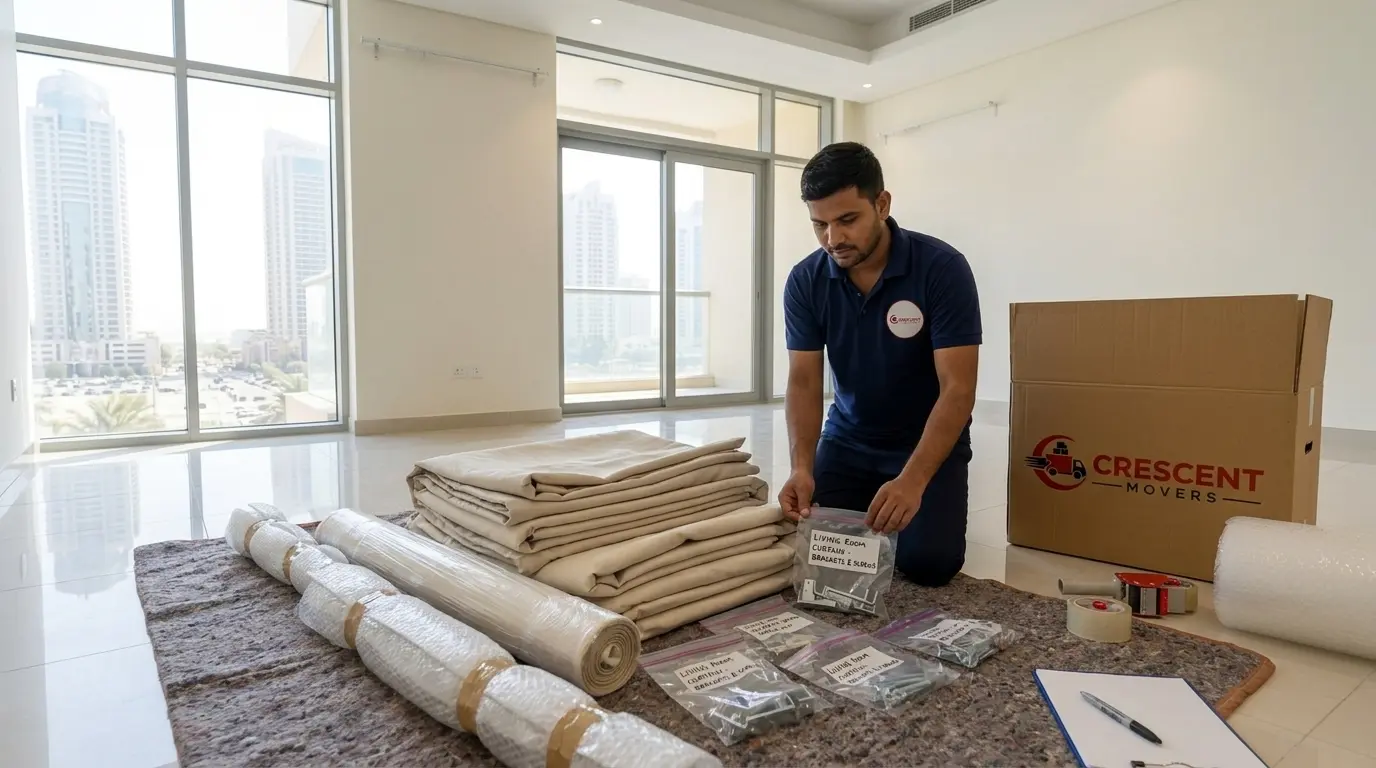
Curtains and blinds are easy to overlook when preparing for a move. Furniture gets measured, boxes get labeled and appliances receive special attention, while window coverings are often left until the final day. By then, removing a long curtain rod, keeping hooks together or protecting delicate blind mechanisms can become a rushed job.
Preparing curtains and blinds before moving helps protect the fabric, prevent avoidable damage and make reinstallation easier. The process involves deciding which items are worth taking, removing them carefully, keeping their fittings organized and packing each type according to its design.
Not every window covering should automatically go with you. Some may belong to the property, while others may not fit the windows in your new home. A little planning before removal can save time, prevent lost hardware and make your new rooms easier to set up.
1. Why Prepare Curtains and Blinds Before Moving?
Window coverings contain more than fabric. They may include rods, tracks, brackets, rings, hooks, cords, chains, clips or delicate operating mechanisms. If these parts become separated or damaged, putting everything back together can be difficult.
Preparing them in advance helps you:
- Keep curtain panels clean during transport.
- Reduce creases and protect delicate fabrics.
- Prevent rods and tracks from bending or scratching other belongings.
- Keep screws, brackets and hooks together.
- Avoid tangling blind cords or damaging operating mechanisms.
- Identify which covering belongs to each room.
- Make unpacking and reinstallation more organized.
The main objective is to treat window coverings as individual household items rather than removing everything and putting it into one box.
2. Decide What to Take to Your New Home
Before removing anything, decide whether each curtain or blind should move with you.
If you rent your current property, check your tenancy agreement and clarify which fittings belong to the landlord. In an owned property, check any relevant sale or handover arrangements before removing fixtures that are expected to remain.
Next, consider your new home's windows. A curtain that fits a wide bedroom window may be too short for the new room. A blind made for a particular window opening may not fit another opening, even if both windows look similar.
Use these questions to guide your decision:
- Does the item belong to you?
- Is it in good enough condition to reuse?
- Are the new windows a suitable size?
- Will the mounting brackets or tracks fit the new property?
- Would keeping the item be more practical than replacing it?
Measure the new windows where possible before deciding. Do not assume that existing blinds will fit simply because the new apartment has similar windows.
If you decide not to take an item, arrange its disposal, donation or handover appropriately rather than leaving it behind without permission.
3. Gather the Right Preparation Supplies
Having basic supplies ready makes the removal and packing process more manageable.
| Item | Purpose |
|---|---|
| Small labeled bags | Store screws, hooks, clips and brackets |
| Marker and labels | Identify the room and corresponding window |
| Clean packing paper | Separate and protect delicate parts |
| Soft cloth or clean sheet | Cover clean curtains and fabric panels |
| Suitable moving boxes | Keep small parts and accessories organized |
| Bubble wrap or protective padding | Cushion vulnerable hardware where appropriate |
| Measuring tape | Check window dimensions and rod lengths |
| Screwdriver or appropriate tool | Remove compatible fittings carefully |
Use packaging that suits the item. Heavy curtain rods may need a long, rigid protective package, while small fittings are better kept in closed bags.
Avoid putting adhesive tape directly onto curtain fabric, painted surfaces or delicate blind materials. Adhesive residue can be difficult to remove.
For additional preparation guidance, see our guide to packing your home before moving.
4. Remove Curtains and Curtain Rods Carefully
Prepare the area first
Move nearby furniture out of the way if practical. Make sure you have a stable, suitable step ladder for reaching high fittings, and ask another adult to assist with long or heavy rods.
Do not stand on chairs, unstable furniture or window ledges. If the window covering is unusually high, heavy or difficult to reach safely, arrange appropriate assistance.
Remove the curtains
Open the curtains and identify how they attach to the rod or track. Depending on the design, they may use rings, hooks, eyelets, clips or a heading tape.
Remove the panels gently rather than pulling them forcefully. Keep delicate hooks and decorative attachments from catching on the fabric.
If the curtains have several panels, keep them grouped together and note which window they came from.
Take down the rod or track
If you are taking the rod with you, check how it is secured before removing any screws. Support the rod while loosening its fittings so it does not fall or twist.
For long rods, a second person can help hold the other end. Keep brackets, finials and connecting pieces together.
Some tracks and window treatments have concealed fasteners, special clips or complex mounting systems. Follow the manufacturer's instructions rather than forcing a fitting that will not release.
If removal requires electrical disconnection, specialist access or work that could damage the property, use a qualified professional or seek permission from the responsible property manager.
5. Prepare Different Types of Blinds
Blinds do not all come apart in the same way. Their materials and operating mechanisms determine how they should be handled.
Roller blinds
Roll the blind up fully before removal, if the manufacturer's instructions allow it. Inspect the brackets and identify any release clip or locking mechanism.
Support the blind while releasing it. Avoid pulling on the fabric, chain or spring mechanism. Once removed, protect the rolled material and keep the brackets and other small parts in a labeled bag.
Venetian blinds
Raise the slats and secure them in their normal closed or raised position as appropriate for the model. Check whether a decorative valance covers the headrail.
Release the headrail from its brackets according to the manufacturer's instructions. Support wider or heavier blinds while removing them, as they may have additional centre supports.
Keep the slats aligned and avoid placing heavy objects on top of them. Bent slats may be difficult to straighten.
Vertical blinds
Remove individual fabric or slat panels carefully from their clips. Keep them in the correct order if their arrangement matters.
Once the panels are separated, follow the instructions for removing the headrail. Keep carriers, clips and small fittings organized.
Roman blinds and other fabric blinds
Fabric-based blinds can be vulnerable to creasing, snagging and damage to their operating cords. Check whether the fabric panel can be detached from its headrail and follow the product instructions.
Do not pull fabric away from attached mechanisms without understanding how it is secured.
Motorized blinds
Motorized window coverings may contain wiring, electronic controls or a rechargeable power system. Do not disconnect electrical components or remove fixed wiring yourself.
Consult the manufacturer's instructions and arrange qualified assistance where required. Keep remote controls and detachable accessories labeled with the corresponding blind.
6. Clean and Protect Fabric Window Coverings
Curtains and fabric blinds should be clean and completely dry before they are packed for an extended period. Dust, moisture and trapped dirt can contribute to unpleasant odours or staining during storage and transport.
Check the care label before washing, steaming or dry-cleaning curtains. Some fabrics may shrink, lose their finish or become damaged if cleaned incorrectly.
For items that can be cleaned at home:
- Remove loose dust using a suitable method.
- Follow the manufacturer's washing or cleaning instructions.
- Allow the fabric to dry completely.
- Check for loose threads, damaged seams or detached hooks.
- Fold the fabric along its natural seams where possible.
Reduce creases during packing
For long curtains that you want to keep in good condition, a wardrobe-style moving box can allow them to remain hanging on suitable padded hangers. This may help reduce folding creases.
If you use a regular moving box, line it with clean packing paper and fold the curtains loosely. Avoid compressing delicate fabric into a small space.
Do not place heavy hardware or sharp fittings inside the same package as the fabric. Even small brackets can snag or tear a curtain during transport.
Our guide to protecting furniture during moving offers additional advice on protecting household belongings.
7. Pack Rods, Brackets and Small Hardware
Curtain rods, tracks and accessories need their own preparation.
Protect long rods and tracks
Check the rod's length and material before selecting packaging. Use a rigid protective sleeve or suitable long box where possible. Wrap vulnerable ends and decorative finials so they do not scratch other items.
Do not bend a rod to make it fit into a smaller box. If a rod is designed to separate into sections, dismantle it only according to its design.
Keep small fittings together
Place screws, brackets, rings, clips and other small parts into separate bags. Label each bag with the room and window location.
For example:
- Main bedroom — curtain rod brackets.
- Living room — roller blind fittings.
- Second bedroom — curtain hooks and rings.
Where practical, place the labeled bag inside a clearly marked box with the related item. Do not attach hardware with tape directly to a painted rod or delicate fabric.
Protect operating components
Chains, cords and detachable controls should be secured according to the manufacturer's instructions. Avoid tight knots or bends that may interfere with operation.
Keep remote controls for motorized blinds with the matching unit, but protect them from impact and accidental button presses.
8. Label Everything by Room and Window
Labeling is particularly helpful when a home has several windows with similar curtains or blinds.
Instead of labeling a package only “curtains,” include the room and, where needed, the window position.
For example, use “Living room — left window” or “Main bedroom — blackout curtains.” If there are several matching blind units, assign each one a number and use the same number on its hardware bag.
A simple inventory can include:
| Item | Room or window | Accessories |
|---|---|---|
| Curtain panels | Main bedroom | Hooks and rings |
| Roller blind | Living room | Brackets and chain |
| Venetian blind | Study | Headrail fittings |
| Curtain rod | Guest room | Finials and screws |
Photograph unusual fittings before removal if you think the pictures will help you remember how the parts fit together. This is especially useful for systems with several brackets or an unfamiliar mounting arrangement.
For a broader approach to organizing boxes, see the guide on how to label moving boxes.
9. Prepare for Reinstallation at the New Property
Before unpacking the window coverings, check whether they are suitable for the new windows and whether the mounting points are compatible.
Measure the new windows and compare their dimensions with the curtains, rods and blinds you have brought. Check that the rods can be supported properly and that the blind mechanism can operate without obstruction.
Do not assume that old screw holes, brackets or mounting hardware will be suitable for the new property. Wall materials, window frames and mounting requirements can differ.
If drilling is required in a rented property or managed building, obtain any necessary permission before making changes. For heavy, motorized or complex window treatments, consider a qualified installer.
Unpack fabric items before installation and inspect them for damage, dust or moisture. Reassemble each item using its labeled fittings and the manufacturer's instructions. Test the operation gently before using it normally.
10. Common Mistakes to Avoid
Removing everything at the last minute
Rushed removal increases the chance of lost screws, damaged fabric and forgotten brackets. Prepare window coverings before the final loading period.
Assuming blinds will fit the new windows
Window dimensions and mounting arrangements vary. Measure before deciding to transport an existing blind for reuse.
Packing damp curtains
Moisture trapped inside a box can cause unpleasant smells and may damage fabric. Make sure items are fully dry before packing.
Mixing hardware from different rooms
Similar-looking brackets and screws may not be interchangeable. Keep each set labeled and separate.
Forcing a blind mechanism
Different blinds use different release systems. If a fitting resists removal, stop and check the instructions rather than applying excessive force.
Forgetting what belongs to the property
Some window coverings may be included in a tenancy or property handover. Confirm ownership and removal permission before taking fixed items down.
Final Checklist Before Moving Day
- Confirm which curtains and blinds you are allowed to take.
- Check whether the items will fit the new windows.
- Gather the appropriate tools and packing materials.
- Remove curtains and rods carefully.
- Follow product instructions for each type of blind.
- Clean fabric items where appropriate and dry them fully.
- Protect rods, tracks and delicate mechanisms.
- Place small fittings in labeled bags.
- Label each item by room and window.
- Keep remote controls and special accessories with the matching blind.
- Photograph unfamiliar fittings before removal.
- Check items for damage when unpacking at the new home.
Conclusion
Preparing curtains and blinds before moving is mainly about careful removal, suitable protection and keeping every component organized. Decide what should travel with you, check the new window dimensions, handle each blind according to its design and label hardware so it can be identified later.
A little preparation makes it easier to protect fabric, avoid missing fittings and reinstall the right window covering in the right room. If a system is heavy, motorized or difficult to remove safely, use the manufacturer's instructions and arrange qualified assistance where needed.
If you are planning a household relocation and need help organizing the transport of your belongings, you can contact Crescent Movers to discuss your requirements.
Frequently Asked Questions
1. Should I remove curtains before moving day?
Yes, if you own them and intend to take them with you. Remove them early enough to clean, dry, label and pack them without rushing. Check tenancy or handover arrangements before removing fixed window coverings.
2. How should I pack curtains to reduce wrinkles?
Clean and dry them according to their care instructions. Where suitable, use padded hangers and a wardrobe-style box. Otherwise, fold them loosely along their natural seams and avoid compressing them tightly.
3. Can I take blinds from a rented apartment?
That depends on who owns the blinds and what your tenancy or handover arrangements require. Confirm with your landlord or property manager before removing fixed blinds or their brackets.
4. How should I pack curtain rods?
Protect rods in a rigid sleeve or suitable long box. Cushion the ends and decorative parts, and keep brackets, screws and finials in labeled bags. Never force a rod to bend to fit the packaging.
5. Can I remove roller blinds myself?
Some roller blinds use straightforward release brackets, while others have different locking or spring mechanisms. Check the manufacturer's instructions and stop if the blind will not release easily. Seek assistance for heavy or awkward installations.
6. Should curtains be washed before packing?
Clean them when their care instructions permit it. More importantly, make sure they are completely dry before packing to help avoid moisture-related odours or staining.
7. What should I do with the screws and brackets?
Store small fittings in separate labeled bags that identify the room and window. Keep each bag with its corresponding rod or blind so the parts are easier to identify during reinstallation.
8. What if my old blinds do not fit the new home?
Measure the new windows before moving the blinds. If they do not fit or their mounting system is incompatible, consider leaving them where permitted, donating them or arranging appropriate disposal rather than transporting items you cannot reuse.